

Check out our latest products


![[PETHROOM] Cat Nail Clipper Trimmer for Indoor Cats with Circular Cut Hole (2mm) | Premium Sturdy Stainless Steel Blade Cat Claw | Safe, Easy, Accurate, Quiet & Fast | Avoid Overcutting](https://m.media-amazon.com/images/I/6156hi88deL._AC_SL1298_.jpg)
![[PETHROOM] Professional Eye Comb for Pets | Stainless Steel Tear Stain Remover for Cats & Dogs | Gentle Round-Head Grooming Tool | Compact & Portable for Eye Gunk Removal](https://m.media-amazon.com/images/I/71+W758uwXL._SL1500_.jpg)
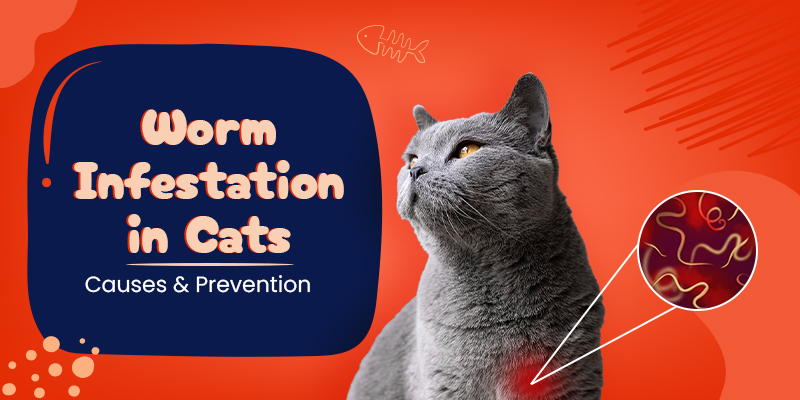
Cats of all ages and breeds are vulnerable to internal worm infestations. These worms tend to take shelter in our feline babies’ organs and cause serious harm to their health. However, thanks to medical science, we now have access to a wide range of deworming treatments on the market that work excellently to kill these pesky parasites and eliminate them from our pets’ bodies. In this blog, we will shed light on worm infestation in cats and discuss its causes and preventive methods. Let’s get started.
Common Types of Worms that Infest Cats
Cats are generally susceptible to intestinal worms like roundworms, hookworms, tapeworms and whipworms, as well as heartworms and lungworms.
Causes of Worm Infestation in Cats
Let’s look at the common causes of worm infestation in cats.
➡ Ingestion of Infected Prey
Cats have natural hunting instincts and tend to catch and eat rodents, birds, or insects. On many occasions, the hunted animals carry worm larvae or eggs, which the cats unknowingly consume and suffer from worm infestation.
➡ Coming into Contact with a Contaminated Environment
Worm eggs and larvae can thrive in soil and other areas frequented by animals. If your feline comes in contact with such surfaces, it may easily pick up the eggs while digging, playing or grooming itself.
➡ Getting Transmitted from Mother Cats
Often, mother cats unknowingly end up transmitting worms to their young ones while nursing or grooming them. This is a common cause of roundworms in kitties.
➡ Infestations from Fleas and Other Parasites
Many tapeworm species require an intermediate host like fleas to infect a host, such as dogs or cats. Cats often ingest fleas carrying tapeworm eggs while grooming themselves and end up getting infested with tapeworms.
➡ Drinking Contaminated Water
On many occasions, cats end up drinking contaminated water during their outdoor visits. Those waters often contain worm eggs and larvae that get passed on to the cat’s internal organs, leading to infestation.
How to Prevent Worm Infestation in Cats?
Let’s look at some of the key preventive measures to prevent worm infestation in cats.
➡ Prioritizing Consistent Deworming
Consistent administration of deworming treatments is crucial to keep internal worms at bay. Kittens usually require deworming from 4 weeks of age until they are 6 months old. Once an adult, felines need to be dewormed every 1 to 3 months, depending on their health condition.
➡ Maintaining Good Hygiene and Cleanliness
As cat parents, it is important for you to maintain utmost cleanliness to keep the cat safe from worms. You must keep your cat’s litter box clean by scooping daily and changing the litter regularly to minimize your furry baby’s exposure to worm eggs. You should also clean and disinfect the living areas of your kitty on a regular basis. Also, do not forget to wash your hands thoroughly after handling the litter box and soil.
➡ Keeping Fleas in Control
As fleas transmit tapeworm eggs, it is crucial to prevent and control them so as to prevent tapeworm infestation. There is a wide range of flea treatments available on the market, including Advantage, Bravecto Plus, Broadline and Credelio.
➡ Preventing Cats from Hunting Wild Creatures
Cats are active hunters and tend to go astray to hunt rodents and birds, which often leads to worm infestation. Therefore, if you have a cat, it is important to limit its outdoor time so as to prevent it from hunting.
➡ Scheduling Regular Veterinary Checkups
Getting your feline baby regularly checked by the vet should always be your priority. During the checkups, the vet will conduct fecal exams that will help them detect worm infestation, if any and provide appropriate treatment.
Frequently Asked Questions
Q:1 What are the most effective deworming treatments for cats?
A: Some of the effective deworming treatments for cats include Droncit Spot-on, Drontal Allwormer Tablets, Milbemax, Paragard Wormer and Aristopet Allwormer Tablets.
Q:2 Are worms that infest cats contagious to humans?
A: Yes, worms that infest cats can be contagious to humans but the risk varies depending on the type of worm and its exposure.
Q:3 Can I touch my cat if it has worms?
A: Yes, you can touch your cat if it has worms, as the parasites don’t get transmitted to humans through casual contact. However, make sure to thoroughly wash your hands after touching your cat.
Q:4 Should I deworm myself if my cat has worms?
A: You don’t need to deworm yourself just because your cat has worms. Self-medicating without symptoms or a confirmed infection is not recommended and can be unsafe.
Concluding Note
Worm infestation in cats is a common yet serious health concern that requires proactive management. While a lot of felines may hardly show any symptoms initially, untreated infestations can lead to serious health problems such as malnutrition, digestive issues, anemia and even life-threatening ailments. Always remember that thorough care and attention to your cat’s environment will ensure its well-being and reduce the risk of zoonotic transmission to humans. Staying vigilant is the best way to keep worms at bay and ensure a healthy life for your feline companion.
At CanadaVetCare, we carry a wide range of dewormers for cats at the best prices. Check out our online store to enjoy attractive offers on your preferred treatments.

David joined CanadaVetCare in 2013 as a product analyst and veterinary assistant. Being a passionate pet lover and keen animal health researcher, David had always found ways and solutions to help pet parents to improve their pets’ health. He is always happy to answer pet health-related queries and recommending pet parents for the right pet product for their furry companions.