

Check out our latest products


![[PETHROOM] Cat Nail Clipper Trimmer for Indoor Cats with Circular Cut Hole (2mm) | Premium Sturdy Stainless Steel Blade Cat Claw | Safe, Easy, Accurate, Quiet & Fast | Avoid Overcutting](https://m.media-amazon.com/images/I/6156hi88deL._AC_SL1298_.jpg)
![[PETHROOM] Professional Eye Comb for Pets | Stainless Steel Tear Stain Remover for Cats & Dogs | Gentle Round-Head Grooming Tool | Compact & Portable for Eye Gunk Removal](https://m.media-amazon.com/images/I/71+W758uwXL._SL1500_.jpg)
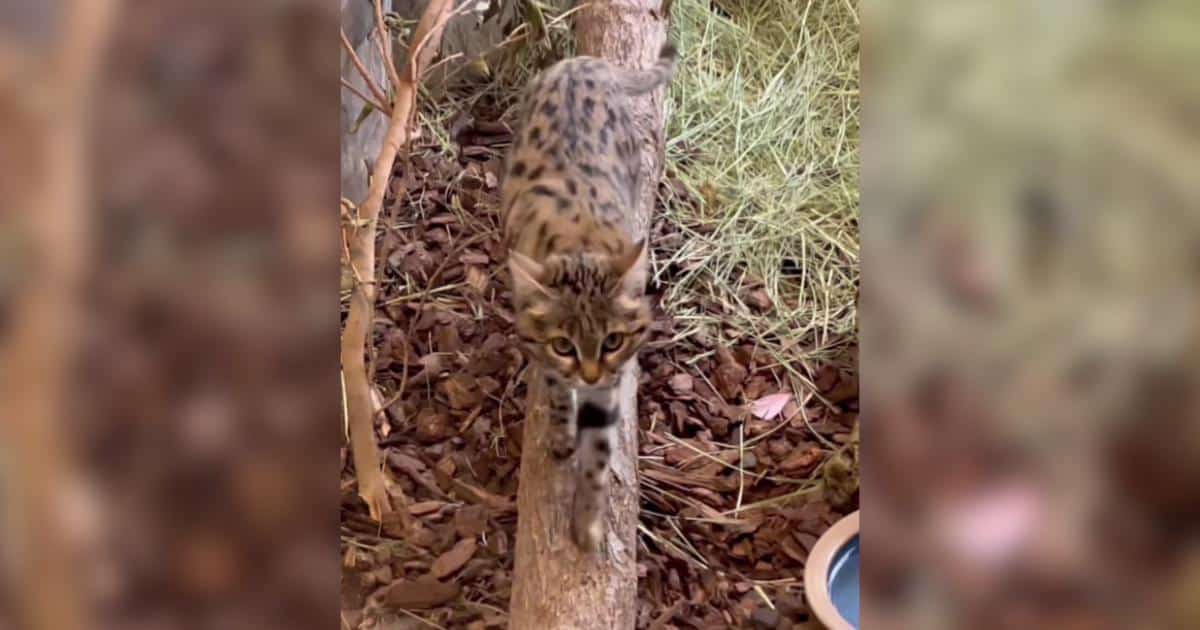
A small bundle of fur curls up inside a woven basket, her bright eyes quietly taking in the world around her, and it feels impossible not to pause and smile. This tiny newcomer at a Salt Lake City area zoo may look gentle and almost toy-like, but she carries a reputation that surprises nearly everyone who meets her. Named Gaia, this young black-footed cat is considered the most lethal wild cat on Earth when measured by hunting success. Yet in these first moments of settling into her new home, she appears calm, curious, and irresistibly sweet, offering a striking contrast between her fierce instincts and her delicate presence.
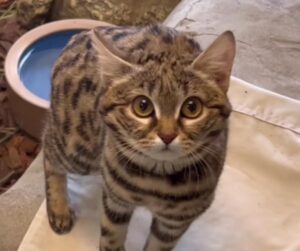
On December 28, Utah’s Hogle Zoo officially welcomed Gaia, an eight-month-old black-footed cat, into its Small Animal Building. At just three pounds, she is barely larger than a domestic kitten, yet she carries the instincts of a powerful hunter. Early photos and videos capture her nestled into a cozy basket, her body relaxed as she calmly studies her surroundings. There is a sense of comfort in her posture, as if she already knows she is safe.
Gaia’s enclosure offers warm bedding, quiet corners, and space to explore at her own pace. In recent footage, she can be seen sitting peacefully in her tiny bed, ears alert, eyes bright, absorbing every sound and movement around her. Her expressions shift between curiosity and contentment, revealing a personality that is both feisty and endearing.
A Small Cat With a Big Purpose
The zoo received Gaia following a breeding recommendation from the Black-Footed Cat Consortium, a collaborative conservation program supported by the Association of Zoos and Aquariums. Zoo staff describe her as small in size but bold in spirit, a description that fits her species perfectly.
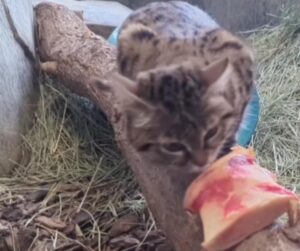
Black-footed cats are known as the most lethal African wildcat, with an astonishing prey capture success rate of about 60 percent. According to Amanda Collins, vice program leader for the consortium, this efficiency makes them remarkable hunters despite their tiny stature. In the wild, they survive on a diet of rodents, birds, reptiles, insects, and even spiders, relying on stealth and patience rather than strength.
Yet these impressive skills have not protected them from decline. Populations of black-footed cats continue to decrease across Botswana, Namibia, and South Africa. A 2016 assessment estimated that only around 9,700 remain in the wild. As a result, the species is listed as vulnerable by the International Union for Conservation of Nature and Natural Resources, placing it one step away from being endangered.
Gaia’s presence at the zoo represents hope for the future of her species. With only 29 black-footed cats currently part of the consortium, every individual matters. Zoo officials noted that successful breeding could make a meaningful difference in sustaining the population and protecting genetic diversity.

Though these cats may bite in self-defense, they do not prey on humans. Up close, their tabby-like coats and distinctive black or dark brown paw pads give them an almost familiar appearance. Watching Gaia settle into her new home, it is easy to forget her wild reputation and instead see a young animal adjusting, learning, and thriving.
From her snug basket to her alert gaze, Gaia’s story is one of quiet strength and cautious optimism. She may be tiny, but her role in conservation is anything but small.
Click ‘SHARE’ below to pass it on to family and friends!