

Check out our latest products


![[PETHROOM] Cat Nail Clipper Trimmer for Indoor Cats with Circular Cut Hole (2mm) | Premium Sturdy Stainless Steel Blade Cat Claw | Safe, Easy, Accurate, Quiet & Fast | Avoid Overcutting](https://m.media-amazon.com/images/I/6156hi88deL._AC_SL1298_.jpg)
![[PETHROOM] Professional Eye Comb for Pets | Stainless Steel Tear Stain Remover for Cats & Dogs | Gentle Round-Head Grooming Tool | Compact & Portable for Eye Gunk Removal](https://m.media-amazon.com/images/I/71+W758uwXL._SL1500_.jpg)
Understand the top five causes of biting in cats — including pain, stress, and overstimulation — and effective ways to calm the behavior.
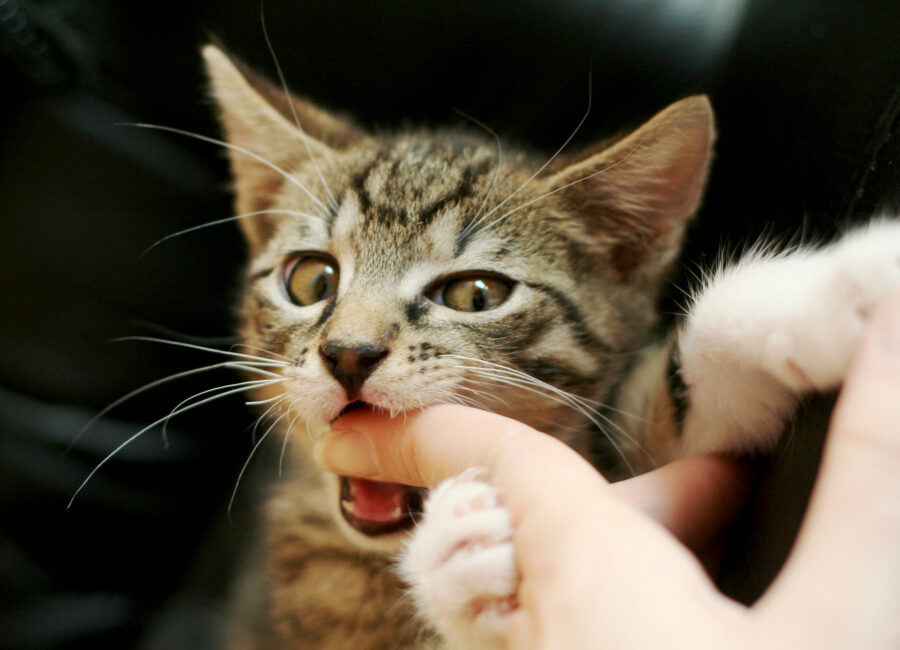
“Why is my cat biting me?” If you’re asking yourself this question, you’re not alone. Whether your feline friend is a kitten, adult or senior, biting is confusing and concerning behavior. You can usually manage it once you understand the cause.
From overstimulation to pain or anxiety, several factors can trigger biting. With the right approach, you can help your cat feel calm, safe, and less reactive.
Why do cats bite?
Biting and unusual aggression in cats shouldn’t be ignored. Even if your cat isn’t doing much damage with this behavior, it’s something you need to address. Here are five reasons why your cat may be biting you:
Cats are very sensitive and can become overstimulated quite easily. When this happens, they may communicate it by biting unexpectedly. Here’s a common example. You’re petting your cat and he seems to be enjoying it – then he suddenly bites you.
Many cats enjoy being touched. However, too much petting can overstimulate them and lead to aggressive behavior. Another example of overstimulation can occur when you’re playing with your cat. If he becomes overstimulated, he may attack and bite you instead of his toy.
If your cat bites, you may automatically assume he’s angry with you. But he may actually be redirecting his aggression. Something going on outside the house, such as the appearance of another cat, may upset him. He may then redirect his aggression towards you. This is especially common among indoor cats.
If your normally affectionate cat bites you for no apparent reason, he may feel frustrated or territorial. He could be reacting to something he smells or sees outside.
A health problem could cause your cat to bite. Because cats cannot verbally communicate how they feel, they may lash out if they’re sick or in pain. Any medical condition that causes pain or discomfort can make your cat bite or behave aggressively.
A cat may do this at random, or when you touch a painful area while petting him. Whenever your cat behaves unusually, schedule a vet visit.
Your cat may also bite you as a way to communicate. It isn’t unusual for cats to communicate with their people the same way they do with each other — in a physical way. Needy cats may bite to get your attention instead of meowing. For example, your cat may bite and try to lead you somewhere, or bite you as a way to instigate play.
Just like humans, cats can develop mental issues that impact behavior. A medical condition or environmental change can trigger this behavior. Even a normally laid-back cat can develop anxiety later in life. Anxiety can lead to unusual behavior, such as biting. Cats may respond with fear or become more sensitive to stimulation because of anxiety.
Are you wondering, “Why is my cat biting me?” Know this behavior usually has an underlying cause. With patience, observation, and the right approach, most cats can stop this behavior and become affectionate companions again (see sidebar on page xx).
By addressing the root of the issue and responding with understanding rather than punishment, you’ll strengthen your bond and create a calmer, happier cat.
How to address biting in cats
If your cat is biting you, the most important thing to remember is that there’s a reason for it. Instead of getting frustrated and trying to punish him, it is essential to take an understanding approach and dive a little deeper into the cause.
First, consider your cat’s history. Fear or instinct makes rescue cats more likely to bite. Poorly socialized cats may bite more if not taught how to communicate by their mothers.
Secondly, schedule a vet visit to rule out any medical conditions. Once you’ve pinpointed why your cat is biting you, you can move on to solutions for reducing the behavior. Here are some suggestions:
-
Use positive reinforcement:
Cats do not respond to being punished; they respond to positive reinforcement. Focus on rewarding good behavior that takes the place of biting or aggression.
-
Read your cat’s body language:
One of the best ways to stop your cat from biting is to understand what he’s trying to communicate. This helps prevent him from resorting to aggression. Body language such as dilated pupils and laid-back ears are clear signs your cat is irritated or overstimulated. Give him some space.
-
Try redirection:
Another great option for resolving aggressive behavior in cats is to redirect their attention, perhaps with a toy or scratching post. This is a good idea if your cat bites because he’s overstimulated or becomes too rough during playtime.
-
Provide natural calming aids:
Natural remedies such as flower essences or a pheromone diffuser can calm your cat and reduce overstimulation or aggression.
-
Consult a feline behaviorist:
If the above steps don’t seem to be resolving the issue, consider asking a feline behaviorist for help.
[callouts]
Any medical condition that causes pain or discomfort can lead to biting.
A needy cat may resort to biting as a way of getting your attention.
Post Views: 27