

Check out our latest products


![[PETHROOM] Cat Nail Clipper Trimmer for Indoor Cats with Circular Cut Hole (2mm) | Premium Sturdy Stainless Steel Blade Cat Claw | Safe, Easy, Accurate, Quiet & Fast | Avoid Overcutting](https://m.media-amazon.com/images/I/6156hi88deL._AC_SL1298_.jpg)
![[PETHROOM] Professional Eye Comb for Pets | Stainless Steel Tear Stain Remover for Cats & Dogs | Gentle Round-Head Grooming Tool | Compact & Portable for Eye Gunk Removal](https://m.media-amazon.com/images/I/71+W758uwXL._SL1500_.jpg)
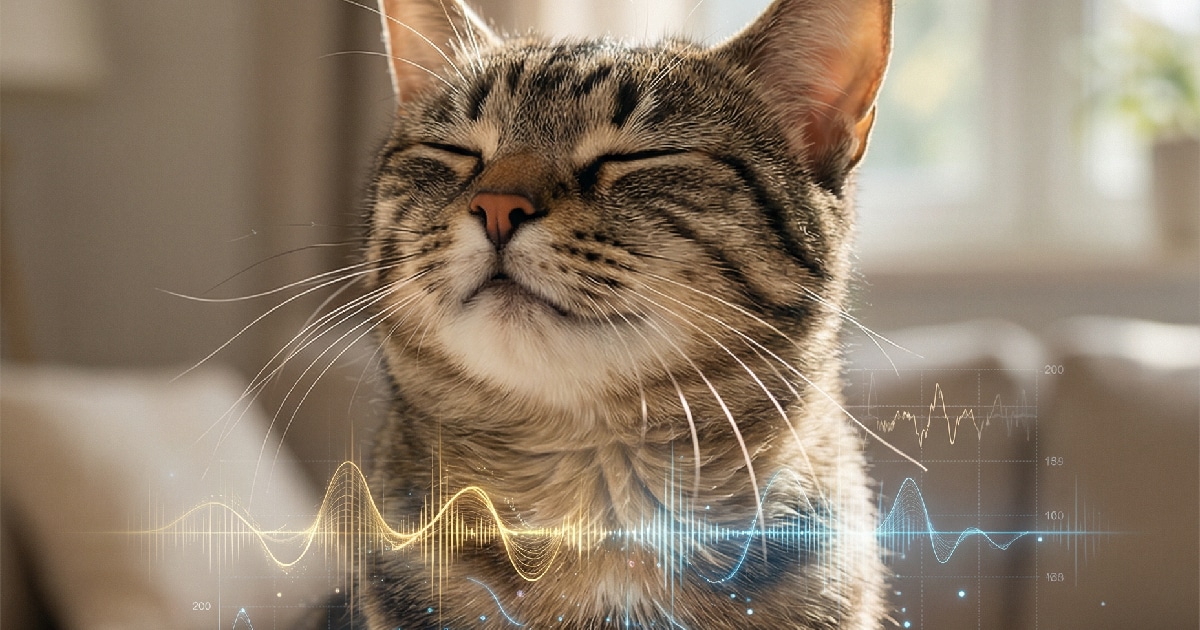
If you have ever noticed how your cat’s purr seems to feel familiar and comforting in a deeply personal way, science now offers an explanation. While meows may grab attention with their variety and urgency, a new study suggests that purring quietly reveals something far more intimate. Researchers have found that a cat’s purr remains remarkably consistent throughout its life, acting as a unique vocal signature tied to that individual animal. Unlike meows, which shift depending on mood, need, or environment, a purr stays steady, offering insight into a cat’s identity, emotional state, and sense of safety within its world.

A new study led by scientists at the Museum für Naturkunde Berlin and the University of Naples Federico II reveals that while cats constantly adapt their meows, their purrs remain remarkably consistent. Each purr acts like a vocal fingerprint, uniquely tied to the individual cat, regardless of situation or environment.
Researchers used advanced sound analysis tools and recordings from the Animal Sound Archive at the Berlin Natural History Museum to examine vocalizations from both domestic and wild cats. By applying methods originally developed for human speech recognition, the team discovered that domestication has dramatically reshaped how cats use their voices. Meowing has become flexible and expressive, while purring has stayed steady and deeply personal.
Purrs Tell a Cat’s Personal Story
Meows tend to grab our attention because cats use them almost exclusively with humans. They stretch them, sharpen them, soften them, and change their pitch depending on what they want. Food. Affection. Attention. A protest about an empty bowl. These sounds shift easily because they are meant to communicate emotion and intent.
Purring is different. It often appears in moments of safety and connection. A cat curled beside a trusted human. A kitten nestled against its mother. These low, rhythmic vibrations emerge when a cat feels secure, calm, or bonded. Because purring happens in these intimate moments, it remains stable across time and situations.

When researchers tested whether a computer could identify individual cats using only sound, purrs proved far more reliable than meows. Every cat studied had a distinctive purr that stayed consistent, even as their meows changed frequently.
This stability makes sense emotionally. Purring is closely tied to comfort and connection, states that do not require constant adjustment. Meowing, by contrast, reflects a cat’s adaptability and emotional range, shifting with each interaction.
Domestication has played a major role in this contrast. When scientists compared domestic cats to wild species such as African wildcats, jungle cats, cheetahs, and cougars, they found that wild cats’ meows were far less varied. Domestic cats showed significantly greater vocal flexibility.

Living alongside humans shaped that change. People differ widely in routines, reactions, and expectations. Cats that could fine-tune their meows were better able to navigate a human-centered world. Over time, meowing became a versatile tool for communication, while purring stayed grounded in identity and emotional safety.
Together, these findings offer a deeper look into how cats express themselves. A purr is not just a soothing sound. It is a quiet signature of trust, comfort, and individuality. And while meows may change from moment to moment, a purr remains a steady reminder of the unique bond between a cat and the world it feels safe in.