
Check out our latest products


![[PETHROOM] Cat Nail Clipper Trimmer for Indoor Cats with Circular Cut Hole (2mm) | Premium Sturdy Stainless Steel Blade Cat Claw | Safe, Easy, Accurate, Quiet & Fast | Avoid Overcutting](https://m.media-amazon.com/images/I/6156hi88deL._AC_SL1298_.jpg)
![[PETHROOM] Professional Eye Comb for Pets | Stainless Steel Tear Stain Remover for Cats & Dogs | Gentle Round-Head Grooming Tool | Compact & Portable for Eye Gunk Removal](https://m.media-amazon.com/images/I/71+W758uwXL._SL1500_.jpg)
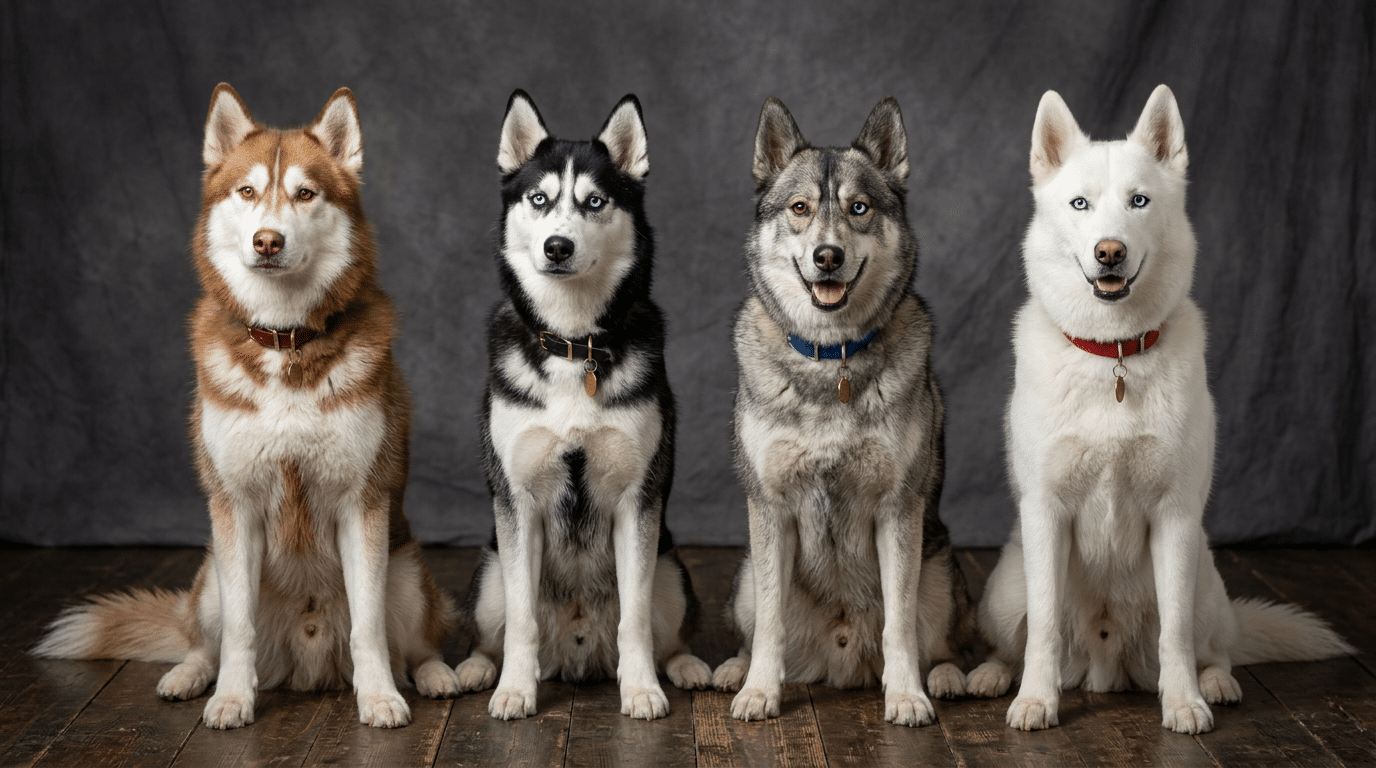
If you’ve ever stood at a dog park watching Huskies trot past and wondered why they look so dramatically different from each other, you’re not alone. The Siberian Husky comes in one of the widest color ranges of any purebred dog, and the AKC officially recognizes nine distinct coat colors for the breed.
Some people assume all Huskies are black and white. But the range actually runs from pure white to deep chocolate to a wild wolf-like agouti pattern. Add in the four possible eye color combinations, and you’ve got a breed that seems to reinvent itself from dog to dog.
This guide covers every AKC-recognized husky color, breaks down what’s rare versus common, gives you a plain-English genetics overview, and explains exactly what those striking eye color variations mean.
📋 The 9 AKC-Recognized Siberian Husky Colors at a Glance
| Color | How Common | Standout Trait |
|---|---|---|
| Black & White | Very Common | Classic sled-dog look |
| Gray & White | Very Common | Ranges from silver to dark wolf gray |
| Red & White | Common | Often paired with liver nose and brown eyes |
| Sable & White | Moderate | Red-tipped black guard hairs |
| Brown & White | Less Common | Deep chocolate tones |
| Agouti & White | Rare | Wild, banded wolf-like coat |
| Black | Rare | True black with minimal white |
| Black, Tan & White | Very Rare | Tri-color pattern unusual for the breed |
| White | Uncommon | Pure white from mask to tail tip |
The 9 AKC-Recognized Husky Colors
1. Black and White
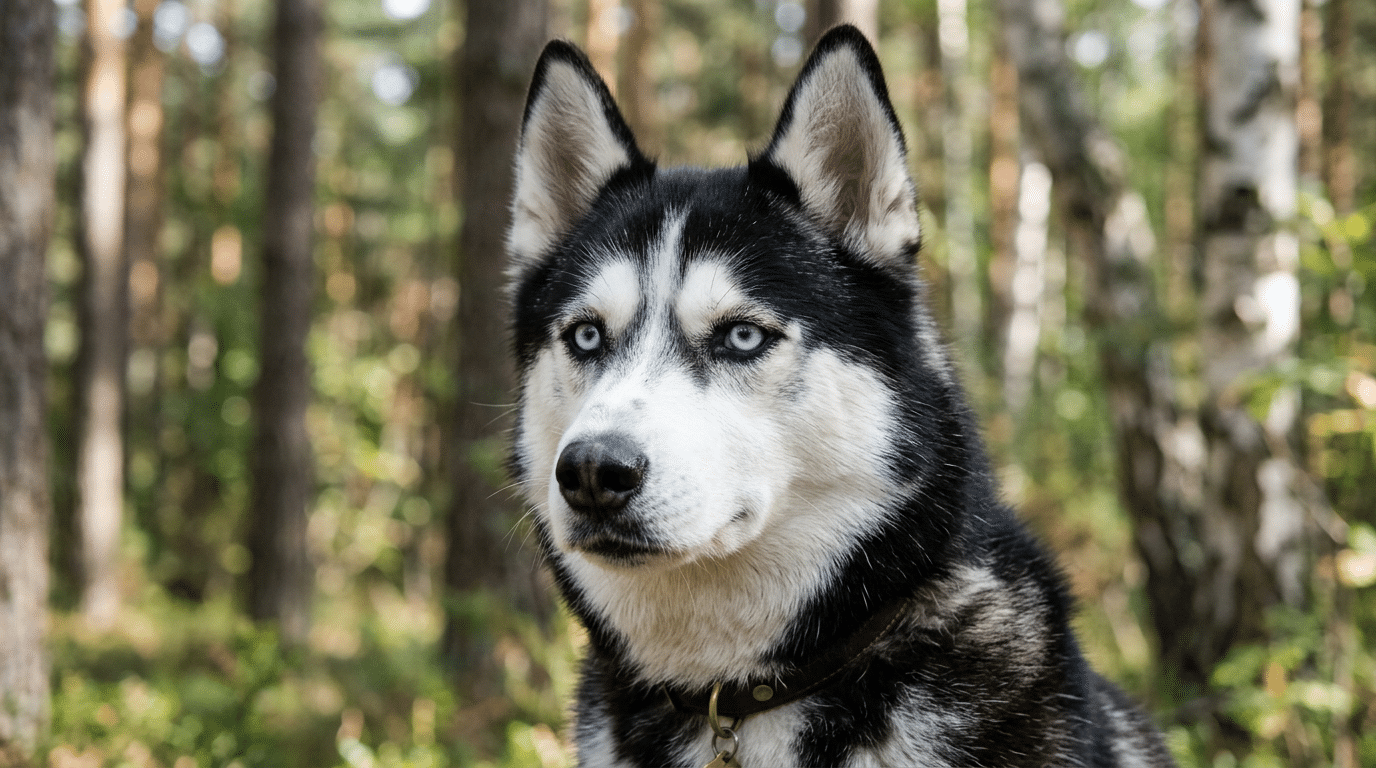
This is probably the color most people picture when they think “Husky.” The black can range from jet black to a softer charcoal, usually with crisp white markings on the face, chest, and legs. It’s the most common Husky color by a wide margin.
Black and white Huskies typically have a black topcoat with white undercoat showing through in spots. That contrast gets even more dramatic when they blow their coat twice a year. If you’ve got one, you already know what that means for your furniture and your vacuum cleaner. If you’re thinking about getting one, check out our tips for grooming a Husky before you commit.
2. Gray and White
Gray is another extremely common Husky color, but “gray” undersells how much variation exists here. A gray Husky might be silver with an almost metallic sheen, or they could be dark charcoal gray that looks almost black in dim light. Some look like a wolf, which is partly why Huskies get so much attention on the street.
The gray coloring comes from a mix of black and white banding on individual hairs, plus white on the belly, mask, and legs. Wolf gray Huskies are especially popular, and honestly, it’s easy to see why.
3. Red and White
Red Huskies turn heads. The coat ranges from a pale strawberry blonde to a deep coppery red. What makes this color stand out even more is that red and white Huskies usually have a liver-colored (brown) nose and brown or amber eyes instead of the typical black nose and blue eyes.
The red color is a recessive trait in Huskies, meaning both parents need to carry the gene for a puppy to show it. It’s common enough that you’ll see red Huskies regularly, but they’re still a minority compared to black and white or gray and white dogs.
4. Sable and White
Sable is one of the trickier colors to identify because it can look a lot like red or gray at first glance. The key is the guard hairs: on a sable Husky, each hair has a red or orange base with a black tip. That banding creates a warm, reddish-brown look with dark shading across the back and withers.
Sable Huskies are sometimes confused with red and white Huskies, but if you look closely at the individual coat hairs, you’ll see that two-tone banding. Puppies can look quite reddish at birth and develop more noticeable black tipping as they mature.
5. Brown and White
Brown Huskies (sometimes called chocolate Huskies) are less common. The coat is a rich, deep brown without the red undertones you’d see in a sable or red dog. Like red Huskies, brown and white dogs often come with a liver nose and amber eyes.
This is one of the less-frequently-seen AKC-recognized colors. Some breeders specifically work to produce chocolate Huskies because of how striking they look, especially with yellow or amber eyes against that deep brown coat.
6. Agouti and White
Agouti is the wild-type color you see in wolves and many other wild canines. Each individual hair has alternating bands of color, usually dark at the tip, lighter in the middle, and dark again at the base. The result is a grizzled, gray-brown pattern that looks raw and primal.
Agouti Huskies are genuinely rare. The gene responsible is the “aw” allele at the Agouti locus, and it’s recessive. Most people who see an agouti Husky think it looks more like a wolf than a domestic dog. They’re stunning, but you won’t see them at every dog park.
7. Black (Solid)
True all-black Huskies are rare. Most Huskies labeled “black” have at least some white on their paws, chest, or face. A genuinely solid black Husky with minimal white markings is unusual and often turns heads.
Solid black Huskies tend to have black noses and can carry either blue or brown eyes. Because of the recessive genetics involved, breeding for solid black is not something most mainstream breeders focus on.
8. Black, Tan, and White
This tri-color pattern is the rarest of the nine AKC-recognized Husky colors. Most people don’t even know Huskies come in this combination. It looks somewhat similar to a German Shepherd’s coloring, with black on the back, tan points on the face and legs, and white markings.
Tri-color Huskies aren’t produced by any dedicated breeding program specifically for this pattern. They pop up occasionally and are a genetic curiosity. They’re 100% purebred Siberian Huskies, just with a gene combination that rarely comes together in this breed.
9. White
White Huskies are pure white from nose to tail tip. No shading, no cream tones, just white. They’re not albino dogs. White Huskies typically have dark pigmentation on their nose and around their eyes, and they can have blue, brown, or bi-eyed eye color just like any other Husky.
Pure white is a recessive color that requires the right combination of genes. White Huskies are uncommon but not extremely rare. They’re absolutely striking, especially with blue eyes, and they photograph like a dream. Fair warning: they also show dirt immediately.
Husky Eye Colors: The Four Possibilities
Coat color gets most of the attention, but Husky eye color is arguably even more distinctive. The breed is one of only a few that regularly produces blue eyes in adults, and the range of eye color combinations is genuinely unique.
👁️ Husky Eye Color Options
| Eye Type | Description | Notes |
|---|---|---|
| Blue | Pale to vivid icy blue | Most iconic Husky eye color; not linked to deafness in this breed |
| Brown | Amber to dark brown | Common in red and brown coat dogs; warm and expressive |
| Bi-eyed | One blue, one brown eye | Completely normal; caused by uneven pigment distribution |
| Parti-eyed | Two colors within one eye | Patches of blue and brown in the same iris; also called “marbled” |
Blue Eyes
Blue eyes in Huskies are caused by a specific genetic variant near the ALX4 gene on chromosome 18. This is different from how merle breeds get blue eyes, and it has no connection to deafness (a concern with some other blue-eyed breeds). Blue eyes appear in Huskies of all coat colors, though they’re most commonly associated with black and white or gray and white dogs. Eye color ranges from pale, almost white-blue to a deep, vivid sapphire.
Brown Eyes
Brown eyes in Huskies range from light amber to dark chocolate. They’re most frequently seen in red, sable, and brown-coated Huskies, though any coat color can produce a brown-eyed dog. Brown-eyed Huskies often look especially warm and expressive. They’re just as healthy as blue-eyed dogs; some people just assume blue equals “purebred” and brown means otherwise, which isn’t true at all.
Bi-eyed
Bi-eyed Huskies have one blue eye and one brown eye. This is considered completely normal in the breed and is accepted in the show ring. It happens when the genetic factors controlling eye pigmentation don’t develop symmetrically. It’s not a health issue. If anything, bi-eyed Huskies get even more stares at the dog park than their single-colored counterparts. Check out our article on dog breeds with the most striking eye colors to see how Huskies stack up against other remarkable-looking dogs.
Parti-eyed
Parti-eyed is the rarest of the four eye types. This means a single iris contains patches of both blue and brown, creating a swirled or sectored appearance within one eye. Some people call it “marbled.” A parti-eyed Husky might have both eyes parti-colored, or just one, or a combination of a solid-color eye on one side and parti on the other. It’s striking, unusual, and completely fine from a health standpoint.
Husky Color Genetics: The Simple Version
You don’t need a biology degree to understand the basics of how Husky coat color works. Here’s a quick overview.
All dog coat colors are controlled by pigments: eumelanin (which produces black and brown tones) and phaeomelanin (which produces red and yellow tones). Multiple gene loci control how these pigments are expressed, diluted, or patterned.
In Huskies, the most important loci are:
- A locus (Agouti): Controls pattern. The “aw” allele produces agouti, “at” produces tan points (responsible for black/tan/white), and “a” produces solid black. “Ay” would produce sable-type patterns.
- B locus: Controls whether eumelanin is black (B) or brown (b). A dog with two copies of “b” produces chocolate/brown instead of black.
- E locus: Controls whether any black pigment is expressed at all. “ee” dogs are red or cream regardless of other genes.
- Dilution locus (D): Can dilute black to blue-gray and red to cream, though this is less common in Huskies.
The white on most Huskies comes from the S (spotting) locus, which controls where white patches appear on the coat. The amount of white can vary quite a bit even within the same litter.
Eye color in Huskies doesn’t follow the same pathway as coat color. The ALX4 gene variant associated with blue eyes in Huskies is independent of the coat color genetics, which is why you can get a red and white Husky with blue eyes or a white Husky with brown eyes.
Rare vs. Common: Breaking It Down
If you’re trying to find a specific color, it helps to know what you’re realistically likely to encounter from a breeder.
Most common: Black and white and gray and white are by far the most frequently produced Husky colors. If you go to a responsible breeder or a Husky rescue, these two will make up the majority of available dogs.
Common but not the majority: Red and white is a popular color that’s regularly available from breeders who work with it. Sable is slightly less common but still not hard to find if you look for it.
Less common: White Huskies and brown/chocolate Huskies exist but require specific breeding pairs. Expect to wait a bit longer if this is your preference.
Genuinely rare: Agouti, solid black, and especially black/tan/white Huskies are uncommon. You won’t find these by calling the first breeder you find. Dedicated breeders with specific bloodlines may produce them, but it often takes time and patience to find a puppy in these colors.
One thing worth noting: color shouldn’t be the main reason you choose a Husky. These dogs are energetic, vocal, escape-artist-level clever, and need serious exercise. A beautiful agouti Husky with no proper outlet will redecorate your house. If you’re researching the breed, take a look at dog breeds similar to Huskies if you want the look but are uncertain whether the Husky’s intensity is right for your lifestyle.
What About Coat Colors Not on the AKC List?
You’ll sometimes see Huskies described as “isabella,” “dilute,” “merle,” or “blue.” Here’s the truth about these.
Blue dilute Huskies: These have a diluted black coat that looks grayish-blue. While this can happen genetically, it’s not a separate AKC-recognized color category. The color would still be registered under gray or black.
Merle Huskies: There is no merle gene in purebred Siberian Huskies. Any Husky labeled “merle” is either a mix or a misidentified agouti or parti-colored dog. Merle requires a specific genetic mutation that isn’t present in the breed’s gene pool. If someone is selling “merle Huskies,” that should be a red flag about their breeding practices.
Piebald: Some white-heavy Huskies are described as piebald, but the breed standard just considers this part of the normal white spotting variation.
The bottom line: stick to the nine AKC-recognized colors if you’re working with a reputable breeder, and be cautious of anyone marketing unusual “rare” colors at a significant price premium. Rarity in color should never come at the expense of health testing and ethical breeding practices.
Does Color Affect Health or Temperament?
Short answer: no. A white Husky isn’t calmer than a black and white one. An agouti Husky isn’t more “wolf-like” in behavior than a red one. Coat color in Huskies has essentially no relationship to temperament or health.
There is one exception worth mentioning: the “double dilute” gene combination (dd) that produces extreme color dilution can sometimes be associated with color dilution alopecia (CDA), a skin and coat condition. This is rare in Huskies and more commonly discussed in breeds like Dobermans and blue Great Danes. Standard Husky coat colors don’t carry this risk.
What does affect a Husky’s health and temperament is genetics, socialization, diet, and exercise. If you bring home a Husky puppy, their diet matters as much as anything else. Take a look at the complete Husky feeding guide to get their nutrition right from day one. And if you’re in the early stages of puppy prep, the Husky puppy shopping checklist covers everything you need before bringing one home.
Husky Colors by Age: What Changes Over Time
Husky coat color can shift quite a bit from puppyhood to adulthood, and it doesn’t always stop there.
Sable puppies are a great example: they’re often born looking quite red or orange and develop the darker black tipping on their guard hairs over the first year. A puppy that looks mostly red at eight weeks might show obvious sable patterning by six months.
White Huskies can be tricky to identify at birth because cream-colored puppies sometimes clear to white as they mature. A truly white Husky will usually be evident by a few months old.
Gray Huskies sometimes get lighter or develop different shading as they age. Senior Huskies often develop white or gray around the muzzle regardless of their base coat color, which just adds to their already distinguished appearance.
If your Husky’s coat seems to be changing in texture rather than color (thinning, losing luster, or showing patchy growth), that’s worth a vet conversation. Coat changes can sometimes signal nutritional gaps or health issues. Keeping up with Husky health supplements can help maintain coat quality year-round.
Grooming Needs by Coat Color
Here’s the thing nobody tells you before getting a Husky: lighter coat colors (white, cream, light gray) show dirt immediately but are also much easier to spot-clean. Dark coat colors (black and white, dark gray) hide mud surprisingly well but show lighter debris like dust and pet dander more obviously.
The grooming demands don’t really differ based on color, though. Every Husky has a dense double coat that needs regular brushing year-round and serious attention during the two annual blow-coat seasons. Our Husky grooming guide walks through the tools and techniques that actually make a difference. White Huskies may need occasional bathing more often if they spend time outdoors, since their coat shows grime faster than dark-coated dogs.
For any Husky, especially pups, making sure nutrition is dialed in makes a real difference in coat quality. The right food helps keep the double coat healthy, shiny, and shed-ready. Check out our guide to the best puppy dog foods for Huskies if you’ve got a young one at home.
Frequently Asked Questions About Husky Colors
What is the rarest Husky color?
The rarest of the nine AKC-recognized Husky colors is the black, tan, and white tri-color pattern. Agouti and solid black are also genuinely rare. Among eye colors, parti-eyed (two colors in one iris) is the least commonly seen combination.
Can a Husky be merle?
No. Purebred Siberian Huskies don’t carry the merle gene. If a dog is labeled a “merle Husky,” it’s almost certainly a mixed breed or the seller is misidentifying an agouti or parti-colored coat. Merle Huskies don’t exist within the purebred gene pool.
Do all Huskies have blue eyes?
No. While blue eyes are iconic in Siberian Huskies, the breed commonly produces brown, amber, bi-eyed (one of each), and parti-eyed (two colors in one iris) individuals as well. Brown eyes are especially common in red and chocolate-coated Huskies. All eye colors are equally healthy and accepted by the AKC breed standard.
What is an agouti Husky?
An agouti Husky has individual hairs with alternating bands of dark and light color, producing a wild, wolf-like grayish-brown appearance. It’s the oldest, most primitive coat pattern in domestic dogs and one of the rarest color expressions in Siberian Huskies. Both parents must carry the recessive agouti allele for a puppy to display this coloring.
Does Husky coat color affect temperament?
No. Coat color has no relationship to a Husky’s temperament, energy level, trainability, or health. All Siberian Huskies, regardless of color, share the same breed traits: high energy, strong prey drive, vocal tendencies, and a need for significant daily exercise and mental stimulation.
How many colors does the AKC recognize for Siberian Huskies?
The AKC recognizes nine standard colors for the Siberian Husky: black and white, gray and white, red and white, sable and white, brown and white, agouti and white, black, black/tan/white, and white. The breed standard notes that all colors from black to pure white are acceptable.
Can Husky coat color change as they age?
Yes, especially in the first year of life. Sable Huskies often look quite red as puppies before darker tipping develops. White puppies may appear cream at birth and clear to white by a few months old. Most adult Huskies’ colors stabilize after their first coat but can lighten slightly with age, and senior dogs often develop white muzzle hair regardless of base coat color.
What does bi-eyed mean in a Husky?
Bi-eyed means the Husky has one blue eye and one brown eye. This is a natural and accepted trait in the breed, caused by asymmetrical pigment distribution during development. It’s completely healthy and allowed in AKC conformation shows. Parti-eyed, a similar but different trait, means a single iris contains both blue and brown coloring.
Bottom Line
The Siberian Husky is one of the most visually diverse purebreds out there. Nine AKC-recognized coat colors, four distinct eye color combinations, and near-infinite variation in markings and shading mean you could have 20 Huskies in a room and no two would look quite the same.
Black and white and gray and white are your most common outcomes. Agouti, solid black, and tri-color are your genuinely rare finds. Red and white is a beautiful middle ground. White Huskies are stunning but show every speck of dirt they encounter.
Blue eyes are iconic but not the only option. Bi-eyed dogs are completely healthy. Parti-eyed Huskies exist and are amazing. None of it has anything to do with health, temperament, or trainability.
Whatever color draws you to this breed, know what you’re signing up for: a high-energy, vocal, escape-prone, fur-tornado of a dog who will be your shadow, your entertainment, and occasionally your nemesis. Worth every bit of it, honestly.
iHeartDogs is reader supported. Some of the links below may be paid affiliate links, where we receive a small commission on a product at no additional cost to you.