
Check out our latest products


![[PETHROOM] Cat Nail Clipper Trimmer for Indoor Cats with Circular Cut Hole (2mm) | Premium Sturdy Stainless Steel Blade Cat Claw | Safe, Easy, Accurate, Quiet & Fast | Avoid Overcutting](https://m.media-amazon.com/images/I/6156hi88deL._AC_SL1298_.jpg)
![[PETHROOM] Professional Eye Comb for Pets | Stainless Steel Tear Stain Remover for Cats & Dogs | Gentle Round-Head Grooming Tool | Compact & Portable for Eye Gunk Removal](https://m.media-amazon.com/images/I/71+W758uwXL._SL1500_.jpg)
iHeartDogs is reader-supported. When you buy via links on our site, we may earn an affiliate commission at no extra cost to you.
Getting the food amount wrong with a Cane Corso isn’t just inconvenient — it can cause real health problems. Too much food and you’re looking at joint stress, obesity, and a shortened lifespan. Too little and your dog’s muscles won’t develop properly, their energy will tank, and their immune system takes a hit.
This guide breaks down exactly how much to feed a Cane Corso at every life stage, from squirmy 8-week-old puppies to senior dogs in their golden years. You’ll also find a full breakdown by body weight, meal frequency recommendations, and a clear list of signs your dog is eating too much or too little.
Let’s get into it.
Why Cane Corsos Have Unique Feeding Needs
Cane Corsos are a large, muscular breed — males typically weigh 99-110 lbs and females run 88-99 lbs, though larger individuals aren’t uncommon. That size means their caloric and nutritional needs look very different from a 30-lb dog.
They’re also a breed prone to specific health issues like hip dysplasia, bloat, and obesity-related joint problems. Feeding the right amount is one of the most effective things you can do to prevent those conditions from developing. A Cane Corso that maintains a healthy weight will almost always have a better quality of life and a longer one.
Want the full picture on this breed? Check out our complete Cane Corso breed guide for temperament, care, and training info.
How Much to Feed a Cane Corso: By Age and Stage
Feeding amounts change significantly as your Cane Corso grows. Puppies need more frequent meals with higher calorie density. Adults need consistent portions to maintain muscle. Seniors need fewer calories but more joint-supporting nutrients.
📊 Cane Corso Daily Feeding Amounts by Age
| Age | Daily Food Amount | Meals Per Day | Food Type |
|---|---|---|---|
| 8–12 weeks | 1.5–2.5 cups | 4x per day | Large breed puppy |
| 3–6 months | 2.5–4 cups | 3–4x per day | Large breed puppy |
| 6–12 months | 4–6 cups | 2–3x per day | Large breed puppy |
| 1–7 years (adult) | 4–6 cups | 2x per day | Large breed adult |
| 8+ years (senior) | 3–5 cups | 2x per day | Large breed senior |
*Cup amounts assume standard dry kibble (~350-400 kcal/cup). Adjust based on your food’s calorie density.
Cane Corso Puppies (8 Weeks to 1 Year)
Cane Corso puppies grow incredibly fast in their first year. That rapid development means they need more frequent meals and food specifically designed for large breeds. Regular puppy food formulated for small or medium dogs won’t cut it — the calcium-to-phosphorus ratio matters a lot for giant breed bone development.
Avoid overfeeding puppies. This is the single biggest mistake new Cane Corso owners make. A chubby puppy looks cute, but rapid weight gain stresses developing joints and can contribute to orthopedic problems down the road. You want your pup to grow at a steady, moderate pace — not as fast as possible.
From 8-12 weeks: 4 small meals per day. By 3-6 months: drop to 3-4 meals. By 6 months: 2-3 meals per day is fine for most dogs.
Adult Cane Corsos (1 to 7 Years)
Once your Cane Corso hits 18-24 months (they’re not fully mature until about 2 years), you can transition to adult food. Most healthy adults do well on 4-6 cups of high-quality dry kibble per day, split into two meals.
That said, activity level makes a huge difference. A Cane Corso that gets two hours of exercise daily needs more food than one that mostly lounges on the couch. If your dog is highly active — working, training heavily, or running regularly — bump toward the higher end of the range and monitor their weight monthly.
Senior Cane Corsos (8 Years and Up)
Cane Corsos typically have a lifespan of 9-12 years. As they age, their metabolism slows and they become less active. That means they need fewer calories overall, but their nutritional needs shift — more joint support (glucosamine, chondroitin), more easily digestible protein, and fewer empty carbs.
Drop down to 3-5 cups per day for most seniors, and switch to a food specifically formulated for large-breed seniors. Ask your vet at the next annual checkup whether a joint supplement is worth adding at this stage.
How Much to Feed a Cane Corso: By Body Weight
Age is a rough guide, but body weight is more accurate. Here’s how to calculate your Cane Corso’s daily food needs based on what they actually weigh:
📊 Cane Corso Feeding Chart by Body Weight
| Body Weight | Daily Calories Needed | Approx. Cups/Day (400 kcal/cup) |
|---|---|---|
| 60 lbs | 1,200–1,400 kcal | 3–3.5 cups |
| 75 lbs | 1,400–1,600 kcal | 3.5–4 cups |
| 90 lbs | 1,600–1,900 kcal | 4–4.75 cups |
| 100 lbs | 1,800–2,100 kcal | 4.5–5.25 cups |
| 110 lbs | 1,950–2,300 kcal | 4.9–5.75 cups |
| 120+ lbs | 2,100–2,500 kcal | 5.25–6.25 cups |
*These are starting estimates for moderately active adult dogs. Active or working dogs need 10-20% more. Adjust based on body condition score.
How to Calculate Based on Calorie Density
Bag sizes and cup measurements mislead people all the time. A cup of one kibble might have 300 kcal while a different brand packs 450 kcal per cup. That’s a 50% difference — and it adds up fast on a 100-lb dog.
Here’s the simple formula: take your dog’s target daily calorie intake and divide by the calories-per-cup listed on your food bag. That gives you the actual amount to feed. Always check the bag rather than going by the manufacturer’s serving size chart alone — those charts often suggest more than your dog actually needs.
How Many Meals Per Day?
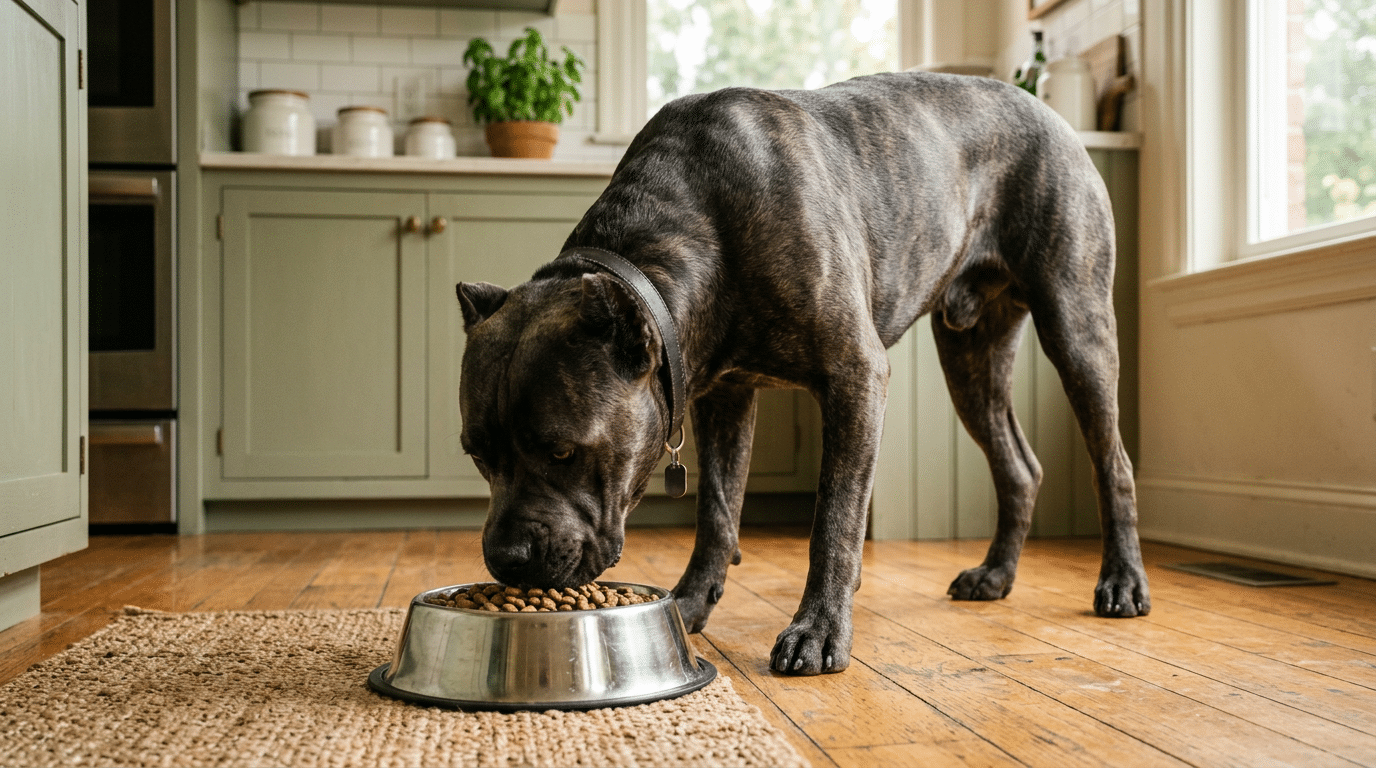
For adult Cane Corsos, two meals per day is the standard recommendation. Split the total daily amount into a morning and evening feeding, spaced roughly 10-12 hours apart.
There’s also a safety reason for splitting meals: bloat. Cane Corsos, like most deep-chested large breeds, are at elevated risk for gastric dilatation-volvulus (GDV), also called bloat. Feeding smaller, more frequent meals instead of one large meal reduces (though doesn’t eliminate) this risk. Also avoid vigorous exercise for at least an hour before and after meals.
Puppies need more frequent feedings — 3 to 4 times per day — because their small stomachs can’t handle large portions and their metabolism burns through food quickly. You can drop to twice daily once they’re past 6 months old and their growth rate starts to level off.
Best Foods for Cane Corsos
Not all dog food is created equal, and Cane Corsos specifically benefit from high-protein, large-breed formulas. Look for these criteria when choosing a food:
- First ingredient should be a named animal protein — chicken, beef, lamb, salmon, etc. Not “meat meal” or “by-products.”
- At least 25-30% protein on a dry matter basis. Cane Corsos are muscle-heavy dogs that need quality amino acids to maintain that muscle mass.
- Large-breed formulation — these have specific calcium/phosphorus ratios to support joint health and controlled growth in puppies.
- Glucosamine and chondroitin included — especially important for adults and seniors given the breed’s hip dysplasia risk.
- Minimal fillers — corn syrup, artificial colors, and excessive carbohydrate padding don’t serve your dog’s nutritional needs.
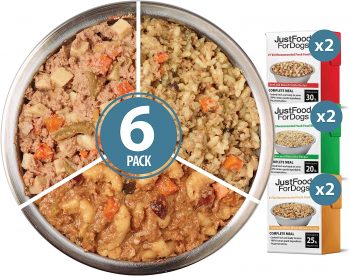
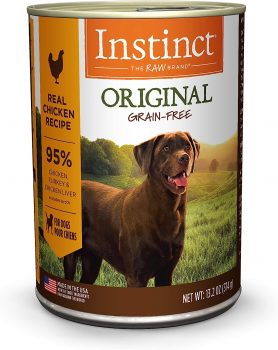
Our founder Justin Palmer, a certified canine nutrition expert, selected the foods below specifically with Cane Corsos in mind. Check our complete dog food guide for more info on how to read labels and what to look for in any food.
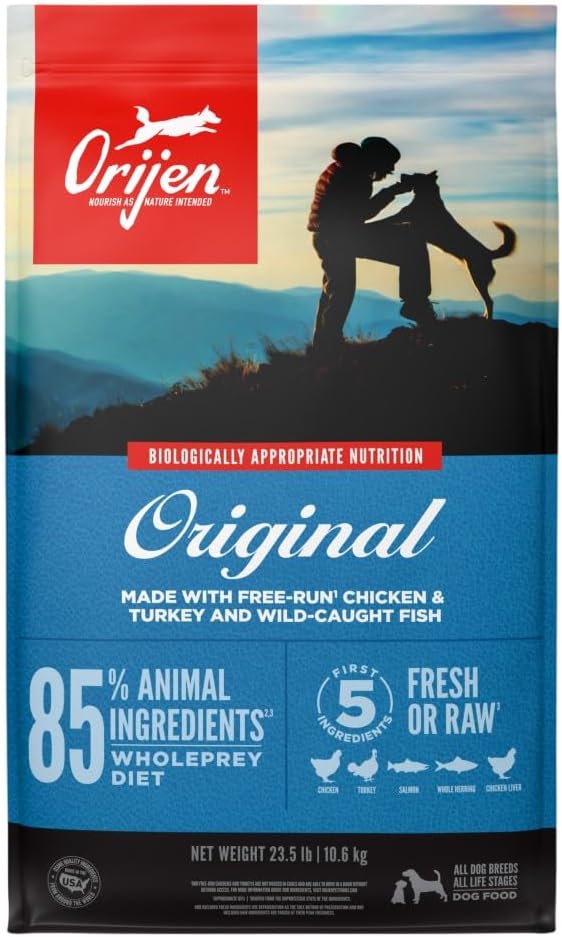
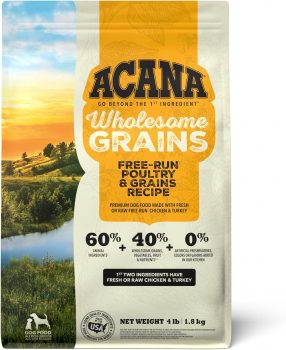
Our 5 Top Foods for Cane Corsos
The diets were selected by our founder Justin Palmer, a certified canine nutrition expert, specifically with Cane Corsos in mind:
| Food | Pros | Cons |
|---|---|---|
|
Check Today’s Price on: iHeartDogs |
|
|
Check Today’s Price on: Amazon |
|
|
Check Today’s Price on: Amazon |
|
|
Check Today’s Price on: Amazon |
|
|
Check Today’s Price on: Amazon |
|
|
Signs Your Cane Corso Is Getting Too Much or Too Little Food
The numbers above are starting points. You still need to watch your dog and adjust. Here’s what to look for:
Signs of Overfeeding
- You can’t feel your dog’s ribs without pressing hard
- No visible waist when viewed from above
- Belly sags noticeably
- Dog seems lethargic and reluctant to exercise
- Weight gain despite no change in food or activity
An overweight Cane Corso is a serious problem. The extra weight puts massive strain on hips, elbows, and spine — all areas the breed is already predisposed to issues in. If your dog is creeping toward obesity, cut portions by 10-15% and add a 20-minute daily walk. Don’t try to crash-diet a large dog — slow, steady reduction is safer.
Signs of Underfeeding
- Ribs visible without touching the dog
- Hip bones and spine prominently visible
- Dull, thin coat
- Low energy and weakness
- Consistently begging or appearing food-obsessed
If you see these signs, increase portions gradually — add 10% to daily intake and monitor over 2 weeks. Sudden large increases can cause digestive upset in big dogs.
The Rib Test
The easiest way to check your dog’s weight is the rib test. Run your fingers along your dog’s side. You should feel ribs with light pressure — not see them, not have to dig for them. If you can’t feel ribs at all without pressing hard, your dog is likely overweight. If ribs are visible from across the room, they’re underweight.
Monthly Food Cost for a Cane Corso
Feeding a large breed dog isn’t cheap. A 100-lb Cane Corso eating 5 cups per day will go through a 30-lb bag of kibble in about 3-4 weeks. Depending on the brand, expect to spend $50-$90 per month on kibble alone.
Premium options like freeze-dried or fresh food can run $150-$300+ per month for a dog this size. That’s worth knowing up front if you’re considering a Cane Corso. Learn more about what makes a quality food worth the extra cost in our best dog food guide.
Raw Diet Considerations for Cane Corsos
Some Cane Corso owners swear by raw feeding. Done right, a raw diet can be excellent for this breed. The key phrase is “done right.” A poorly balanced raw diet is worse than decent kibble.
If you want to try raw, you’ll need to hit roughly 2-3% of your dog’s body weight per day in raw food. For a 100-lb Cane Corso, that’s about 2-3 lbs of raw food daily. The mix should include 70-80% muscle meat, 10% raw meaty bones, 5% liver, and 5% other organ meat.
Talk to a vet or certified canine nutritionist before starting. Switching cold turkey can cause digestive issues — transition over 2-3 weeks by mixing raw with their current food.
Cane Corsos are confident, loyal dogs with a natural guarding instinct. You can read more about the breed’s personality in our Cane Corso temperament guide — understanding their character helps you understand their relationship with food and training, too.
Frequently Asked Questions About Feeding a Cane Corso
1. How many times a day should I feed my Cane Corso puppy?
Young puppies (8-12 weeks) need 4 meals per day. From 3-6 months, 3-4 meals works well. By 6 months, most puppies do fine on 3 meals, and you can move to twice daily around 6-8 months as their growth rate levels off.
2. Can I feed my Cane Corso a raw diet?
Yes, raw diets work well for Cane Corsos when balanced properly. Plan for about 2-3% of body weight per day in raw food. Work with a vet or canine nutritionist to make sure the diet hits all nutritional targets — muscle meat, organs, and raw meaty bones all need to be included in the right proportions.
3. How do I know if I’m overfeeding or underfeeding my Cane Corso?
Do the rib test monthly. You should feel ribs with light pressure but not see them. A visible waist from above and a slight abdominal tuck from the side are signs of a healthy weight. If ribs are hidden under fat or if they’re visibly prominent, adjust your feeding amounts by 10-15% and recheck in 2 weeks.
4. What kind of treats are suitable for Cane Corsos?
High-value single-ingredient treats work best — dried chicken, beef liver, or bully sticks. Keep treats to 10% or less of your dog’s daily calorie budget. A 100-lb Cane Corso eating 1,900 kcal per day has about 190 kcal of “treat budget” — that’s maybe 3-4 small treats, not a whole bag.
5. Are grains bad for Cane Corsos?
Not necessarily. Most Cane Corsos digest grains fine. That said, if your dog shows signs of food sensitivity — chronic ear infections, itchy skin, loose stools — it’s worth trying a grain-free or limited-ingredient diet under vet guidance. The FDA has also raised questions about certain grain-free diets and heart disease in large breeds, so it’s a conversation worth having with your vet.
6. How much water should a Cane Corso drink daily?
Dogs need roughly 1 ounce of water per pound of body weight per day. A 100-lb Cane Corso should drink about 100 oz (about 3 liters) daily, more in hot weather or after exercise. Keep fresh water available at all times and wash the bowl regularly — dogs are picky about stale water.
7. Is it okay to switch my Cane Corso’s dog food brand?
Yes, but transition slowly over 7-10 days to avoid digestive upset. Start with 25% new food mixed with 75% old food. Shift to 50/50 after a few days, then 75% new by day 7-8, and fully new food by day 10. Large dogs are more prone to upset stomachs from abrupt diet changes.
8. Are supplements necessary for Cane Corsos?
Not if you’re feeding a complete and balanced commercial diet. That said, many Cane Corso owners add fish oil (for coat and joint health) and glucosamine/chondroitin (for joint support) once the dog reaches 4-5 years old. Ask your vet before adding anything — some supplements interact with medications or affect conditions like kidney disease.
9. Can Cane Corsos eat fruits and vegetables?
Yes — many are safe and make good low-calorie treats. Good options include blueberries, apple slices (no seeds), baby carrots, and green beans. Avoid grapes, raisins, onions, garlic, and xylitol-containing foods. Those are toxic to dogs, not just inconvenient.
10. How do I transition my Cane Corso from puppy food to adult food?
Transition at around 18-24 months — Cane Corsos mature slower than smaller breeds, so don’t rush the switch. Use the same 7-10 day gradual transition as with any food change. Look for an adult formula specifically designed for large breeds to support their continued joint and muscle health.
11. Should I feed my Cane Corso large-breed specific dog food?
Yes, without question. Large-breed formulas control the calcium-to-phosphorus ratio to support healthy bone development, especially critical in fast-growing puppies. As adults, large-breed food helps with joint health and weight management. Don’t feed a giant-breed dog a formula designed for small or medium dogs.
Bottom Line: Feed Your Cane Corso Right From Day One
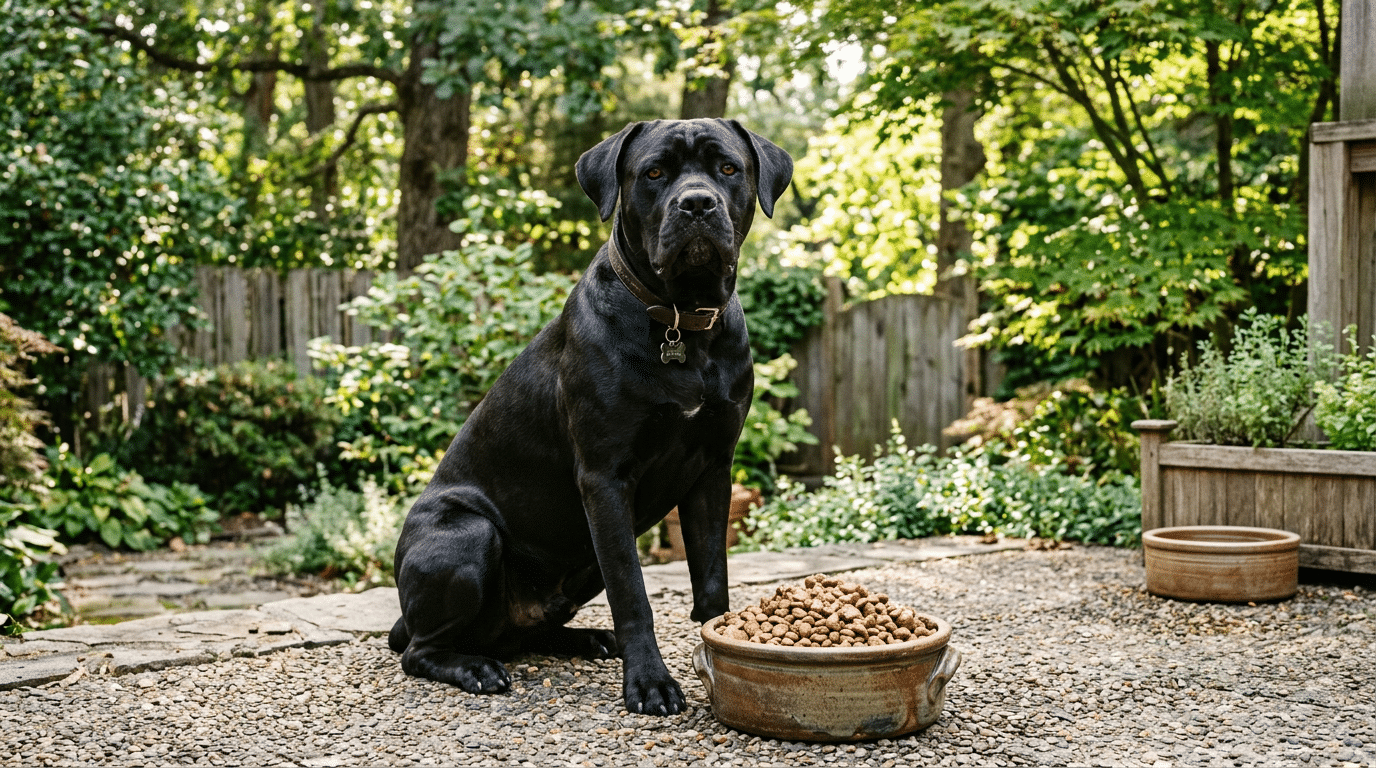
Getting the feeding amounts right is one of the most important things you can do for your Cane Corso’s long-term health. Start with the weight-based guidelines, pick a high-quality large-breed formula, feed twice a day, and check your dog’s body condition monthly.
Don’t obsess over hitting an exact cup count every day. Dogs’ needs shift with activity level, temperature, and age. The real skill is learning to read your dog’s body and adjust accordingly. A dog at a healthy weight, with a visible waist and easily palpable ribs, is a dog being fed well.
If you’re still figuring out the breed, our complete Cane Corso breed guide covers everything from temperament to training to health costs. And if you’re choosing between food options, our complete dog food guide breaks down how to read labels and evaluate quality.
Feed well, monitor regularly, and your Cane Corso will thank you with years of loyal, healthy companionship.
iHeartDogs is reader-supported. When you buy via links on our site, we may earn an affiliate commission at no extra cost to you.