
Check out our latest products


![[PETHROOM] Cat Nail Clipper Trimmer for Indoor Cats with Circular Cut Hole (2mm) | Premium Sturdy Stainless Steel Blade Cat Claw | Safe, Easy, Accurate, Quiet & Fast | Avoid Overcutting](https://m.media-amazon.com/images/I/6156hi88deL._AC_SL1298_.jpg)
![[PETHROOM] Professional Eye Comb for Pets | Stainless Steel Tear Stain Remover for Cats & Dogs | Gentle Round-Head Grooming Tool | Compact & Portable for Eye Gunk Removal](https://m.media-amazon.com/images/I/71+W758uwXL._SL1500_.jpg)
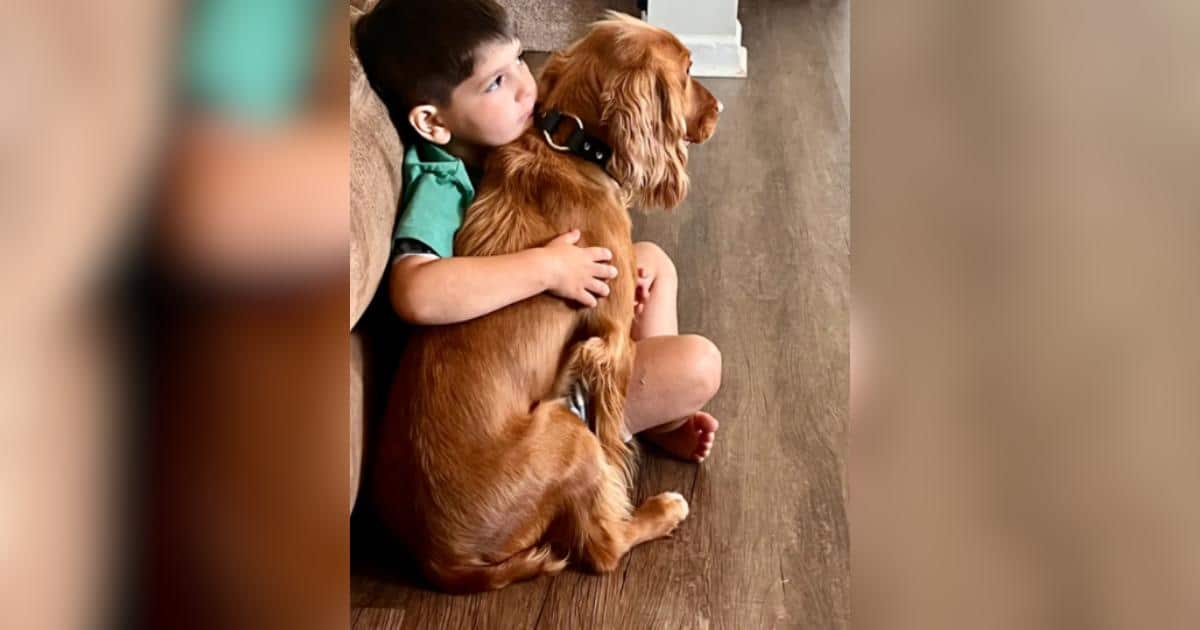
For many young children, life revolves around playtime, school, and carefree moments. For 5-year-old Wells Lewis, daily life also includes the constant challenge of managing Type 1 diabetes. Diagnosed when he was just 3 years old, Wells must live with a condition that requires careful monitoring around the clock. Sudden changes in blood sugar can happen without warning, which can be frightening for a child so young. Thankfully, Wells does not face those moments alone. At his side is Ducky, a devoted service dog who watches over him with remarkable care and instinct.
Wells was just 3 years old when doctors diagnosed him with the autoimmune condition. The disease requires careful attention every hour of the day. Blood sugar levels can shift suddenly, and the consequences can be dangerous. For such a young child, it can feel overwhelming.
But everything began to change when a small English cocker spaniel named Ducky entered his life.
Ducky is not just a pet. He is a highly trained diabetic alert dog whose job is to detect changes in Wells’ blood sugar levels. The moment those levels begin to drop or rise, Ducky can sense it through subtle chemical changes in Wells’ body. The dog alerts Wells’ mother, Aubrie, by gently nudging her with his nose.
Recently, Ducky showed just how deeply he cares about the boy he protects.
One day, Wells experienced a more serious low blood sugar episode than usual. His body felt weak, and the moment demanded quick action. Aubrie stepped in and treated the episode with insulin, working carefully to stabilize her son.
But Ducky stayed close.
Even after the immediate danger passed, the little dog sensed Wells still needed comfort. Without hesitation, he climbed onto the boy’s lap and settled there quietly. He remained still, offering warmth and calm until Wells began to feel better.
According to Aubrie, this tender moment was not part of Ducky’s formal training.
“He’s not trained to do that,” she explained. “That’s just the loyalty of who he is as a dog.”
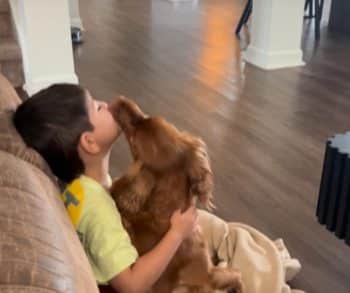
The scene revealed a softer side of their bond. Most days, Wells is full of energy. He spends his time running, playing Frisbee, and exploring the backyard with Ducky close behind. Because he rarely sits still, moments of quiet care like this are uncommon.
“A lot of the time, Wells just jumps right back into playing,” Aubrie said. “He’s usually too busy to slow down.”
Yet when Wells truly needed him, Ducky instinctively stepped in.
Wells cannot feel the warning signs when his blood sugar shifts too high or too low. To help manage this, he wears a continuous glucose monitor that tracks his levels every five minutes. While helpful, the device is not perfect. Because it measures glucose in fluid rather than directly in blood, readings can sometimes be inaccurate.
That uncertainty worried Wells’ parents. They wanted another layer of protection. So about a year ago, they welcomed Ducky into their family.
The dog came fully trained from M.D. Dogs, a nonprofit that prepares service dogs for people with Type 1 diabetes. From the time he was a puppy, Ducky learned to recognize scent samples connected to changes in blood sugar. When those shifts occur, the body releases specific chemical signals through sweat and saliva. Ducky can detect them long before technology catches up.
In fact, he can sometimes alert the family up to 30 minutes before a dangerous episode becomes obvious.
For now, Aubrie acts as Ducky’s handler. She responds to his alerts, rewards him for his work, and manages his daily care. When Wells grows older, he will eventually take on those responsibilities himself.

During school hours, Ducky stays with Aubrie at home. He enjoys peaceful naps and stretches out in the warm sun. But his favorite moments happen when Wells returns.
The two share a joyful bond that goes far beyond medical support.
“He loves Wells so much,” Aubrie said. “There’s this deep emotional connection.”

When Wells was first diagnosed, Aubrie feared the illness might steal parts of his childhood. Managing diabetes meant finger pricks, insulin pumps, and constant attention to numbers and alarms. It felt like a heavy burden for such a small boy.
Ducky changed that feeling.
The gentle dog gave Wells something no device or medical routine could offer. He gave him comfort, companionship, and the reassurance that he is never facing the disease alone.
Click ‘SHARE’ below to pass it on to family and friends!