

Check out our latest products


![[PETHROOM] Cat Nail Clipper Trimmer for Indoor Cats with Circular Cut Hole (2mm) | Premium Sturdy Stainless Steel Blade Cat Claw | Safe, Easy, Accurate, Quiet & Fast | Avoid Overcutting](https://m.media-amazon.com/images/I/6156hi88deL._AC_SL1298_.jpg)
![[PETHROOM] Professional Eye Comb for Pets | Stainless Steel Tear Stain Remover for Cats & Dogs | Gentle Round-Head Grooming Tool | Compact & Portable for Eye Gunk Removal](https://m.media-amazon.com/images/I/71+W758uwXL._SL1500_.jpg)
Veterinary visits can be stressful for many dogs, but the good news is that you can take steps to make these trips less frightening. Understanding why your dog feels anxious and learning ways to help them can make vet visits easier for everyone involved.
Why Do Dogs Fear the Vet?
Dogs may develop fear of veterinary visits for several reasons. Sometimes a previous negative experience creates lasting anxiety. Other times, lack of early socialization as a puppy can make unfamiliar places scary. The clinic environment itself—with strange smells, sounds, and people—can be overwhelming. Additionally, dogs pick up on our own stress, which can increase their nervousness.
Building Confidence Through Structure
Creating a calm, predictable environment at home helps build your dog’s overall confidence. Establish consistent daily routines for feeding, walks, and playtime. This predictability teaches your dog that good things happen on a regular schedule, which reduces general anxiety.
Use positive reinforcement training methods at home. Ask your dog to sit before receiving treats, meals, or going for walks. This “learn to earn” approach creates consistency and helps your dog understand that following instructions leads to pleasant outcomes.
Preparing for Vet Visits
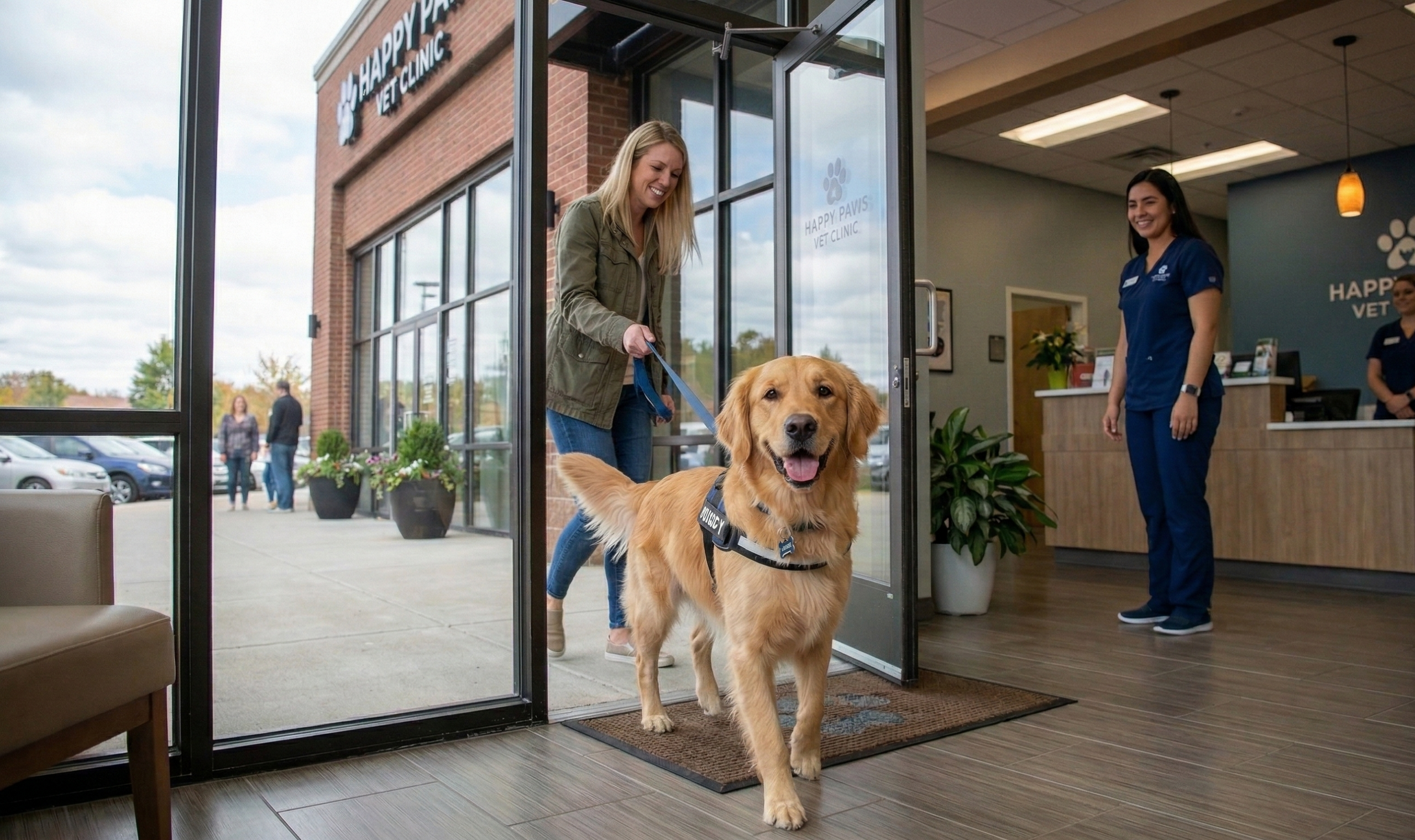
Start preparing well before the appointment. Practice touching your dog’s paws, ears, and mouth at home while giving treats and praise. This makes handling at the clinic less strange. Take your dog on short, positive trips to the veterinary clinic just to say hello and get treats from the staff, without any examination happening.
On appointment days, exercise your dog beforehand to help them relax. Bring high-value treats that your dog loves. Stay calm yourself—remember, your dog reads your emotions.
During the Visit
Never force your dog into scary situations. If possible, let them approach the examination room at their own pace while rewarding brave behavior. Ask your veterinarian about fear-free handling techniques, which minimize stress during examinations.
Some dogs benefit from anti-anxiety medications for vet visits. Discuss this option with your veterinarian well in advance, so you can trial the medication at home first.
If your dog’s fear seems severe or isn’t improving with these strategies, consider consulting a veterinary behaviorist. These specialists can develop customized behavior modification plans and recommend appropriate medications if needed.
Remember, helping your dog overcome veterinary visit anxiety takes time and patience, but it’s worth the effort for their long-term health and wellbeing. Always work closely with your veterinary team to find the best approach for your individual dog.