

Check out our latest products


![[PETHROOM] Cat Nail Clipper Trimmer for Indoor Cats with Circular Cut Hole (2mm) | Premium Sturdy Stainless Steel Blade Cat Claw | Safe, Easy, Accurate, Quiet & Fast | Avoid Overcutting](https://m.media-amazon.com/images/I/6156hi88deL._AC_SL1298_.jpg)
![[PETHROOM] Professional Eye Comb for Pets | Stainless Steel Tear Stain Remover for Cats & Dogs | Gentle Round-Head Grooming Tool | Compact & Portable for Eye Gunk Removal](https://m.media-amazon.com/images/I/71+W758uwXL._SL1500_.jpg)
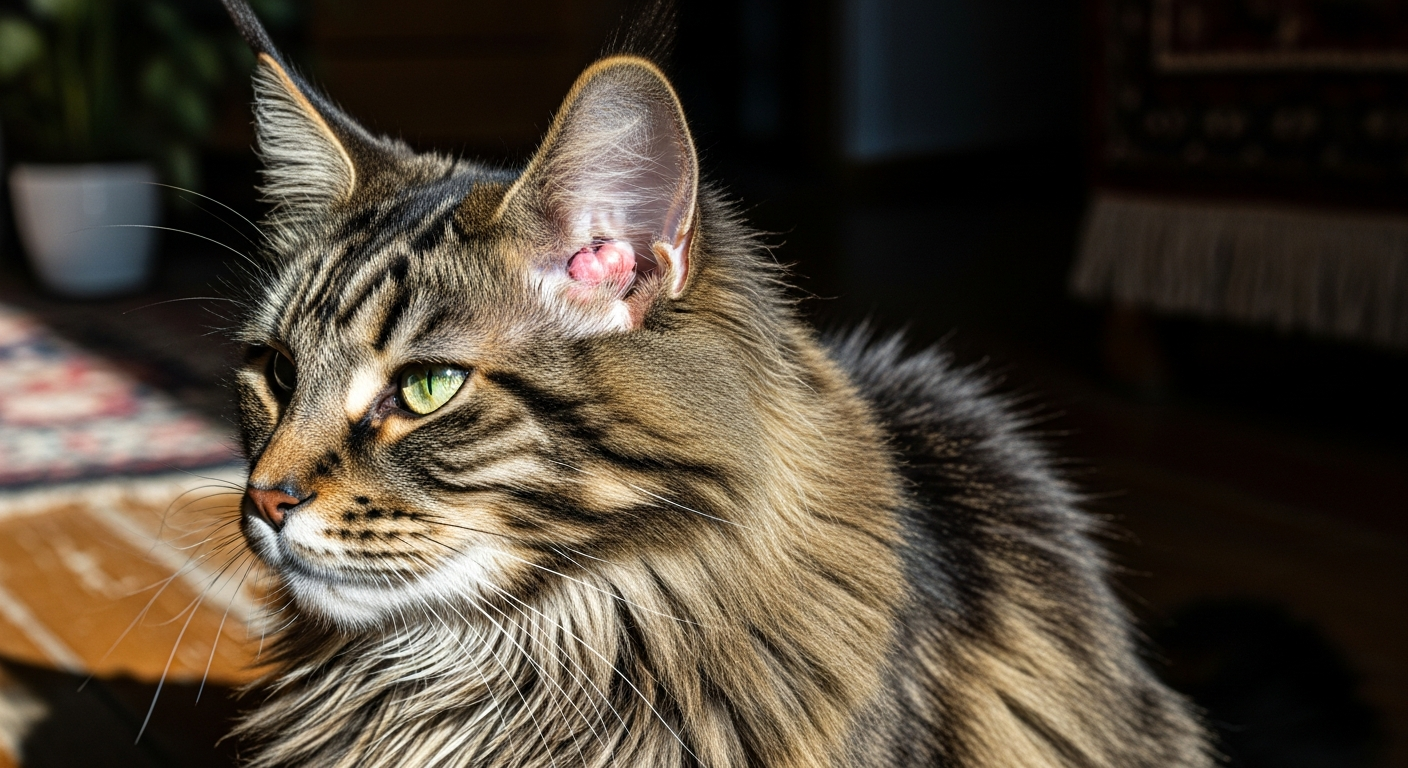
If you’ve noticed an unusual lump or bump in your cat’s ear, you might be worried about the possibility of a tumor. While ear tumors in cats aren’t extremely common, it’s important to understand what they are and what signs to watch for.
What Are Ear Tumors?
Ear tumors are abnormal growths that can develop in different parts of your cat’s ear, including the ear canal, the inner ear flap (called the pinna), or the surrounding tissue. These growths can be either benign (non-cancerous) or malignant (cancerous). Understanding the difference helps you know what questions to ask your veterinarian.
Types of Ear Growths in Cats
One condition that affects cat ears is called apocrine cystomatosis. This involves cyst-like swellings from sweat glands in the ear canal and inner ear flap. Certain breeds, particularly Persians and Abyssinians, may be more likely to develop these growths. Cats can have these cysts in one or both ears.
Other types of tumors can also affect the ear area, though they’re less common. Some growths may be related to skin tumors that happen to develop near or on the ear.
Signs to Watch For
Your cat might show several signs if something is wrong with their ears. You may notice visible lumps, bumps, or masses on the ear flap or near the ear opening. Your cat might also shake their head more than usual, scratch at their ears frequently, or seem uncomfortable when you touch that area.
Other warning signs include unusual discharge from the ear, swelling around the ear or face, skin color changes or darkening around the ear, or bleeding from the ear. Some cats might tilt their head to one side or seem less balanced than normal.
What Should You Do?
If you notice any unusual lumps, bumps, or changes in your cat’s ears, it’s essential to schedule a veterinary appointment right away. Your veterinarian will examine your cat thoroughly and may recommend tests to determine what type of growth is present. This might include taking a small sample of the tissue or using imaging techniques.
Early detection is key. The sooner your veterinarian can examine the growth, the better they can determine the best treatment plan for your feline friend.
Treatment Options
Treatment depends entirely on what type of growth your cat has. Some benign growths might not require treatment if they’re not bothering your cat. Others may need surgical removal. Your veterinarian will discuss all available options based on your cat’s specific situation, overall health, and the type of tumor present.
Remember, you know your cat best. Trust your instincts, and don’t hesitate to contact your veterinarian if you notice anything unusual about your cat’s ears or behavior.
Post Views: 7
Animal Wellness is North America’s top natural health and lifestyle magazine for dogs and cats, with a readership of over one million every year. AW features articles by some of the most renowned experts in the pet industry, with topics ranging from diet and health related issues, to articles on training, fitness and emotional well being.