
Check out our latest products


![[PETHROOM] Cat Nail Clipper Trimmer for Indoor Cats with Circular Cut Hole (2mm) | Premium Sturdy Stainless Steel Blade Cat Claw | Safe, Easy, Accurate, Quiet & Fast | Avoid Overcutting](https://m.media-amazon.com/images/I/6156hi88deL._AC_SL1298_.jpg)
![[PETHROOM] Professional Eye Comb for Pets | Stainless Steel Tear Stain Remover for Cats & Dogs | Gentle Round-Head Grooming Tool | Compact & Portable for Eye Gunk Removal](https://m.media-amazon.com/images/I/71+W758uwXL._SL1500_.jpg)
Cane Corsos are one of the largest dog breeds on the planet — and they grow fast. If you’ve just brought home a puppy that barely fills your hands, it can be hard to picture the 120-pound dog they’ll become. Knowing exactly what to expect at each stage helps you feed the right amount, catch growth problems early, and feel confident your dog is on track.
This guide covers Cane Corso weight by age for both males and females, from newborn through 3 years. You’ll find complete weight and height tables, feeding guidelines by age, a breakdown of growth stages, and answers to the questions owners ask most.
- Adult male weight: 145-165 lbs (65.8-74.8 kg)
- Adult female weight: 95-115 lbs (43.1-52.2 kg)
- Adult male height: 25-27.5 inches at the shoulder
- Adult female height: 23.5-26 inches at the shoulder
- Full height: Reached by 18 months
- Full muscle mass: 2-3 years
- AKC weight standard: Males 99-110 lbs minimum, females 85-99 lbs minimum
Male Cane Corso Weight by Age
Male Cane Corsos grow rapidly — especially in the first 6 months. By their first birthday, most males are already close to their full height, though they won’t finish filling out with muscle until age 2 or 3. Use the table below to track your dog’s progress. These are averages, so some variation is totally normal.
| Age | Weight (lbs) | Weight (kg) | Height (inches) | Height (cm) |
|---|---|---|---|---|
| Newborn | 1-2 | 0.45-0.9 | 3-4 | 7.6-10 |
| 1 month | 8-15 | 3.6-6.8 | 8-11 | 20-28 |
| 2 months | 15-28 | 6.8-12.7 | 11-15 | 28-38 |
| 3 months | 30-50 | 13.6-22.7 | 15-19 | 38-48 |
| 4 months | 50-65 | 22.7-29.5 | 18-23 | 46-58 |
| 5 months | 65-85 | 29.5-38.6 | 22-27 | 56-68.6 |
| 6 months | 80-100 | 36.3-45.4 | 25-29 | 63.5-73.6 |
| 7 months | 90-110 | 40.8-49.9 | 26-30 | 66-76 |
| 8 months | 100-120 | 45.4-54.4 | 27-31 | 68.6-78.7 |
| 9 months | 105-125 | 47.6-56.7 | 28-32 | 71-81.3 |
| 10 months | 110-130 | 49.9-59 | 28-33 | 71-83.8 |
| 11 months | 115-135 | 52.2-61.2 | 29-33 | 73.7-83.8 |
| 12 months | 120-140 | 54.4-63.5 | 30-34 | 76-86.4 |
| 18 months | 135-155 | 61.2-70.3 | 32-36 | 81.3-91.4 |
| 2 years | 140-160 | 63.5-72.6 | 32-36 | 81.3-91.4 |
| 3 years | 145-165 | 65.8-74.8 | 33-37 | 83.8-94 |
If your male is tracking toward the lower end, don’t panic. Genetics, diet quality, and overall health all play a role. If he’s well under the range or not gaining month to month, that’s worth a vet conversation.
Female Cane Corso Weight by Age
Female Cane Corsos are noticeably smaller than males — typically 20-30% lighter at maturity. They still follow the same rapid early growth curve, but they plateau a bit earlier. Here’s what to expect from a female through her first 3 years.
| Age | Weight (lbs) | Weight (kg) | Height (inches) | Height (cm) |
|---|---|---|---|---|
| Newborn | 0.9-1.8 | 0.4-0.8 | 2.5-3.5 | 6.4-8.9 |
| 1 month | 6-12 | 2.7-5.4 | 7-9 | 17.8-22.9 |
| 2 months | 12-24 | 5.4-10.9 | 10-13 | 25.4-33 |
| 3 months | 25-40 | 11.3-18.1 | 13-17 | 33-43.2 |
| 4 months | 40-55 | 18.1-24.9 | 17-21 | 43.2-53.3 |
| 5 months | 50-70 | 22.7-31.8 | 19-24 | 48.3-61 |
| 6 months | 60-80 | 27.2-36.3 | 21-26 | 53.3-66 |
| 7 months | 65-85 | 29.5-38.6 | 22-27 | 55.9-68.6 |
| 8 months | 70-90 | 31.8-40.8 | 23-28 | 58.4-71.1 |
| 9 months | 75-95 | 34-43.1 | 24-29 | 61-73.7 |
| 10 months | 78-98 | 35.4-44.5 | 24-29.5 | 61-75 |
| 11 months | 80-100 | 36.3-45.4 | 25-30 | 63.5-76.2 |
| 12 months | 85-105 | 38.6-47.6 | 26-31 | 66-78.7 |
| 18 months | 90-110 | 40.8-49.9 | 26-31.5 | 66-80 |
| 2 years | 95-115 | 43.1-52.2 | 27-32 | 68.6-81.3 |
| 3 years | 98-120 | 44.5-54.4 | 27-32 | 68.6-81.3 |
Females that are spayed before 12 months may experience slightly different growth trajectories due to hormonal changes. Talk to your vet about the best timing for spay procedures, since early spaying can affect growth plate closure in large breeds.
Cane Corso Growth Stages Explained
Understanding what’s happening at each life stage helps you make smarter decisions about food, exercise, and vet care. Here’s how growth typically breaks down for this breed.
Birth to 3 Months: The Fast Start
This is the most explosive growth period of a Cane Corso’s life. Puppies go from roughly 1-2 pounds at birth to 30-50 pounds (males) by the time they’re 3 months old. That’s an average gain of nearly 10 pounds per week in the first month alone. They’re nursing or transitioning to puppy food, building bone density fast, and developing coordination.
4 to 6 Months: The Awkward Phase
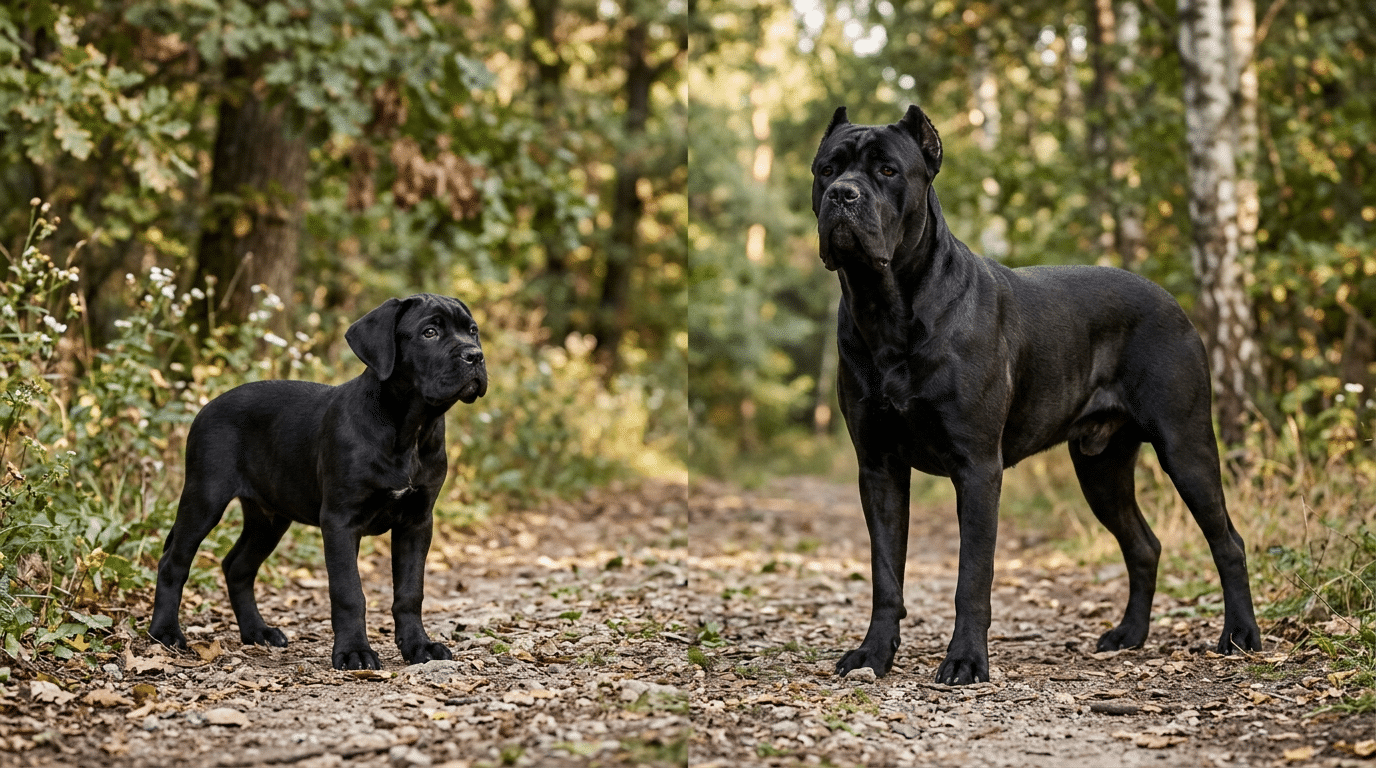
You’ll notice your Cane Corso puppy looks a little… off. Legs too long, head too big for the body, giant paws everywhere. That’s completely normal. This is when a lot of owners panic that something is wrong — it’s not. They’re growing in sections, basically, and everything will catch up by the end of year one.
By 6 months, males can be pushing 80-100 lbs. That’s when you realize this dog is serious. If you haven’t started obedience training yet, right now is the time. Check out the best online dog training courses for Cane Corsos to get started before bad habits form.
7 to 12 Months: Rapid Growth Continues
Your Cane Corso is closing in on adult height during this window. Males often hit 110-140 lbs by their first birthday. They still look a bit lean compared to what they’ll be at 3 years, but the frame is mostly there. This is also when joint health becomes a priority — their growth plates are still open, which makes high-impact activity risky.
12 to 18 Months: Height Peaks
Most Cane Corsos reach their full height somewhere between 12 and 18 months. After that, they stop growing up and start growing out. This is when you transition from puppy food to adult food, which should be formulated for large breeds. The best dog foods for Cane Corsos at this stage prioritize joint support and controlled calorie density.
2 to 3 Years: Full Maturity
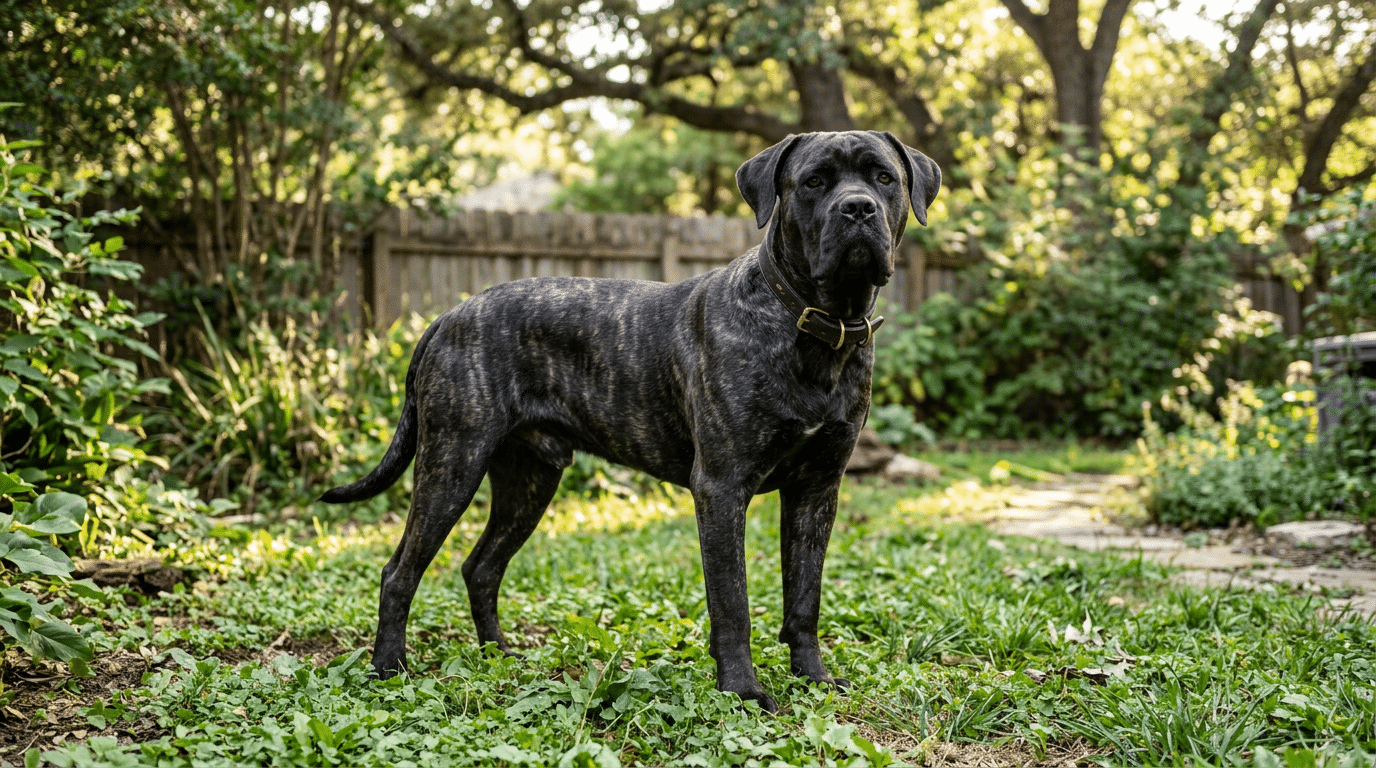
This is when the Cane Corso really comes into their own physically. The chest deepens, the neck thickens, and the whole body fills out into that classic mastiff silhouette. Males typically add another 10-20 lbs of muscle between 18 months and 3 years. At this stage, they’re also emotionally mature — which means training becomes easier and personality settles.
Is Your Cane Corso at a Healthy Weight?
The weight tables above give you ranges, but every dog is different. Here’s how to assess whether your individual dog is at the right weight regardless of what the scale says.
- Rib check: Run your hands along your dog’s sides. You should feel ribs without pressing hard, but not see them. If the ribs are very prominent, they may be underweight. If you can’t feel them at all under fat, they’re overweight.
- Waist check: Look at your dog from above. There should be a visible waist behind the rib cage. A barrel-shaped body with no tuck is a sign of excess weight.
- Belly tuck: From the side, the abdomen should tuck upward slightly behind the rib cage. A belly that hangs level with or below the chest is another overweight sign.
When to call the vet: If your Cane Corso is more than 15% over or under the expected weight range for their age, or if you’re seeing rapid, unexpected weight changes, get a vet checkup. Unexplained weight loss in a young dog can signal parasites, malabsorption, or other health issues.
How Much to Feed a Cane Corso by Age
Feeding a Cane Corso correctly matters more than most owners realize. Overfeeding a growing puppy speeds up bone development in ways that can cause joint problems. Underfeeding stunts proper muscle growth. The right amount depends on age, activity level, and the specific food you’re using.
Puppy Feeding Guide (2-12 Months)
Cane Corso puppies should eat a large-breed puppy formula. Regular puppy food is too calorie-dense and too high in calcium for this breed. The best Cane Corso puppy foods are designed to support controlled, steady growth.
- 2-3 months: 3-4 cups per day, split into 4 meals
- 4-5 months: 4-5 cups per day, split into 3 meals
- 6-8 months: 5-7 cups per day, split into 3 meals
- 9-12 months: 6-8 cups per day, split into 2-3 meals
Check the feeding chart on your specific food bag and adjust based on your puppy’s body condition. These are rough starting points, not one-size-fits-all rules. Adding the right supplements for your Cane Corso puppy during this phase can support healthy bone and joint development.
Adult Feeding Guide (1-7 Years)
Once your Cane Corso passes 12 months, switch to an adult large-breed formula. Most adult Cane Corsos need roughly 6-9 cups of dry food per day, split into two meals. Active dogs on the higher end, less active dogs on the lower end.
Free-feeding (leaving food out all day) is a bad idea with this breed. They’ll overeat. Stick to scheduled meals twice a day, and don’t feed right before or after intense activity — large breeds are prone to bloat, and meal timing matters.
Senior Feeding Guide (7+ Years)
Older Cane Corsos tend to slow down and don’t need as many calories. A senior or mature formula with joint support is a good move around age 7. Adding senior supplements for your Cane Corso can also help maintain mobility and cognitive function as they age.
Frequently Asked Questions About Cane Corso Growth
How big will my Cane Corso get?
Adult males typically weigh 145-165 lbs and stand 25-27.5 inches at the shoulder. Females usually reach 95-120 lbs and 23.5-26 inches. These are averages — genetics, diet, and health all affect final size.
When is a Cane Corso fully grown?
Most reach full height by 18 months, but they keep adding muscle and bulk until around 2-3 years old. Don’t expect your dog to look like an adult Cane Corso until at least age 2.
How fast do Cane Corso puppies grow?
Very fast. Males can gain 8-10 lbs per week in the first few months. Growth slows after 6 months but stays steady through the first year.
Is it normal for a Cane Corso to look skinny as a puppy?
Yes. Between 4-10 months, many Cane Corsos go through a lanky phase where they look thin and disproportionate. That’s normal. They’ll fill out as they mature. If you can see hip bones or the spine prominently, check with your vet.
How much should I feed my Cane Corso puppy?
That depends on the specific food and your puppy’s size. A 3-month-old puppy typically eats 3-4 cups of large-breed puppy food per day in 4 meals. Always follow the guidelines on your food’s packaging and adjust based on body condition, not just weight.
What can I do to support my Cane Corso’s joint health during growth?
Feed a large-breed formula with controlled calcium, avoid high-impact activities before 18 months, keep weight in the healthy range, and consider a joint supplement designed for Cane Corsos. Growth plate injuries are one of the most common issues in this breed during the first year.
Can spaying or neutering affect my Cane Corso’s growth?
Yes, potentially. Early spaying or neutering before 12 months can delay growth plate closure, which sometimes results in a taller but less muscular dog. Most vets recommend waiting until at least 12-18 months for this breed. Talk to your vet about the best timing based on your dog’s individual situation.
My Cane Corso is bigger than others in his litter. Is that normal?
Totally normal. Size variation within a litter is driven by genetics, birth order, and individual feeding competition. As long as your dog is healthy and growing steadily, being on the larger end isn’t a problem. Your vet can confirm everything looks good at your next checkup.
Are Cane Corsos prone to hip dysplasia?
Yes, like most large breeds, Cane Corsos have a higher risk of hip and elbow dysplasia. Keeping them at a healthy weight, avoiding hard exercise on developing joints, and scheduling regular vet checkups all help. If you notice limping, especially in younger dogs, get it checked out quickly.
When should I switch from puppy food to adult food?
Around 12 months is typically the right time for a Cane Corso. Because they continue filling out through age 3, some owners keep them on a large-breed puppy formula until 18 months. Check with your vet on the right timing for your individual dog.
How do I know if my Cane Corso is overweight?
You shouldn’t be able to easily grab handfuls of fat along their sides. You should feel ribs with light pressure but not see them. A visible waist from above and an abdominal tuck from the side are signs of good weight. When in doubt, ask your vet for a body condition score at your next visit.
Do Cane Corsos need a specific diet to reach their full size?
They need a quality large-breed formula — not a generic “all life stages” food. Large breeds need controlled calcium-to-phosphorus ratios during growth. Too much of either mineral during development can cause skeletal problems. Whether you go kibble, raw, or home-cooked, make sure it meets AAFCO large-breed guidelines.
Bottom Line
Cane Corsos grow up fast, but they take years to fully mature. The most important thing you can do during that time is keep them at a healthy weight, feed a quality large-breed formula, and go easy on high-impact exercise while those growth plates are still developing.
If your dog is tracking close to the tables above, you’re in good shape. A bit above or below the averages is fine as long as they’re healthy and growing steadily. If something looks off, your vet is always the right call — early catches are a lot easier to address than problems that have had months to develop.
For everything else your Cane Corso needs as they grow, check out our resources below.