

Check out our latest products


![[PETHROOM] Cat Nail Clipper Trimmer for Indoor Cats with Circular Cut Hole (2mm) | Premium Sturdy Stainless Steel Blade Cat Claw | Safe, Easy, Accurate, Quiet & Fast | Avoid Overcutting](https://m.media-amazon.com/images/I/6156hi88deL._AC_SL1298_.jpg)
![[PETHROOM] Professional Eye Comb for Pets | Stainless Steel Tear Stain Remover for Cats & Dogs | Gentle Round-Head Grooming Tool | Compact & Portable for Eye Gunk Removal](https://m.media-amazon.com/images/I/71+W758uwXL._SL1500_.jpg)
As a cat guardian, understanding your feline companion’s heart rate is an important part of monitoring their overall health. Just like humans, cats have normal pulse ranges that can indicate wellness or signal potential health concerns.
What’s a Normal Heart Rate for Cats?
A healthy adult cat typically has a resting heart rate between 140 and 220 beats per minute. This is significantly faster than a human’s heart rate, which might surprise first-time cat guardians. Kittens usually have even faster heart rates, while older or larger cats may fall on the lower end of this range.
Several factors can affect your cat’s heart rate, including:
- Activity level and excitement
- Stress or anxiety
- Body temperature
- Time of day
- Overall health status
How to Check Your Cat’s Pulse
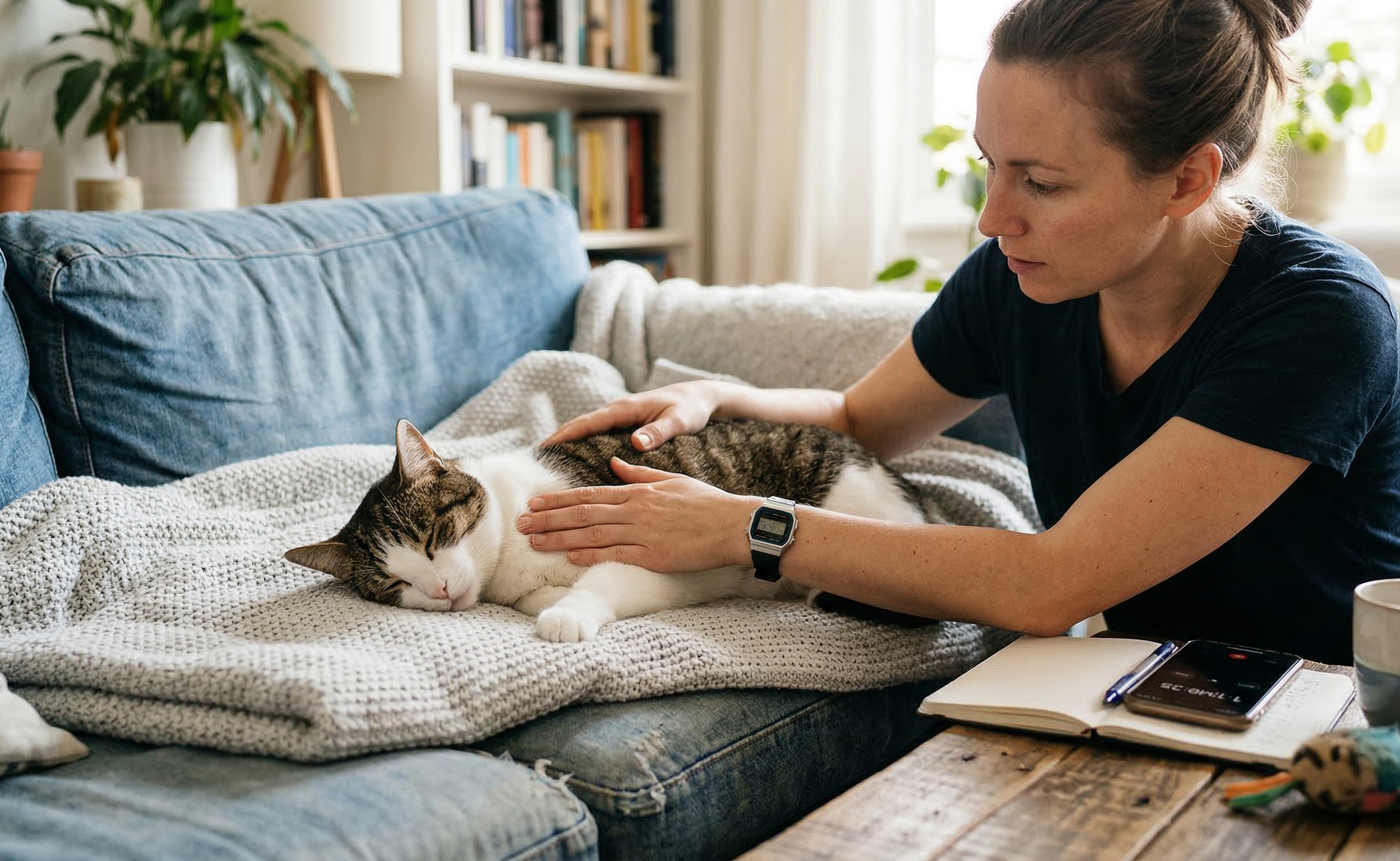
You can monitor your cat’s heart rate at home by placing your hand on their chest, just behind the front leg. Count the beats for 15 seconds and multiply by four to get beats per minute. Alternatively, you can gently feel for a pulse on the inside of the thigh where the leg meets the body.
For the most accurate reading, check your cat’s pulse when they’re calm and relaxed, preferably during rest or sleep.
Signs of Abnormal Heart Rates
Too Fast (Tachycardia): A persistently elevated heart rate above 220 beats per minute at rest may indicate conditions like hyperthyroidism, heart disease, or high blood pressure. Symptoms might include excessive panting, difficulty breathing, weakness, or collapse.
Too Slow (Bradycardia): While less common, an unusually slow heart rate can also signal problems. Watch for lethargy, weakness, or fainting episodes.
Irregular Rhythms: If you notice that your cat’s heartbeat seems irregular or has unusual pauses, this could indicate arrhythmias. These abnormal rhythms can be associated with various heart conditions.
When to Seek Veterinary Care
Contact your veterinarian immediately if you observe:
- A heart rate consistently outside the normal range
- Irregular or unusual heart rhythms
- Any symptoms like difficulty breathing, blue gums, collapse, or excessive tiredness
- Sudden behavior changes accompanied by abnormal pulse rates
While monitoring your cat’s pulse at home can be helpful, it’s not a substitute for professional veterinary care. Regular wellness examinations allow your veterinarian to detect heart problems early through physical exams, listening with a stethoscope, and when necessary, performing specialized tests like electrocardiograms or blood pressure measurements.