

Check out our latest products


![[PETHROOM] Cat Nail Clipper Trimmer for Indoor Cats with Circular Cut Hole (2mm) | Premium Sturdy Stainless Steel Blade Cat Claw | Safe, Easy, Accurate, Quiet & Fast | Avoid Overcutting](https://m.media-amazon.com/images/I/6156hi88deL._AC_SL1298_.jpg)
![[PETHROOM] Professional Eye Comb for Pets | Stainless Steel Tear Stain Remover for Cats & Dogs | Gentle Round-Head Grooming Tool | Compact & Portable for Eye Gunk Removal](https://m.media-amazon.com/images/I/71+W758uwXL._SL1500_.jpg)
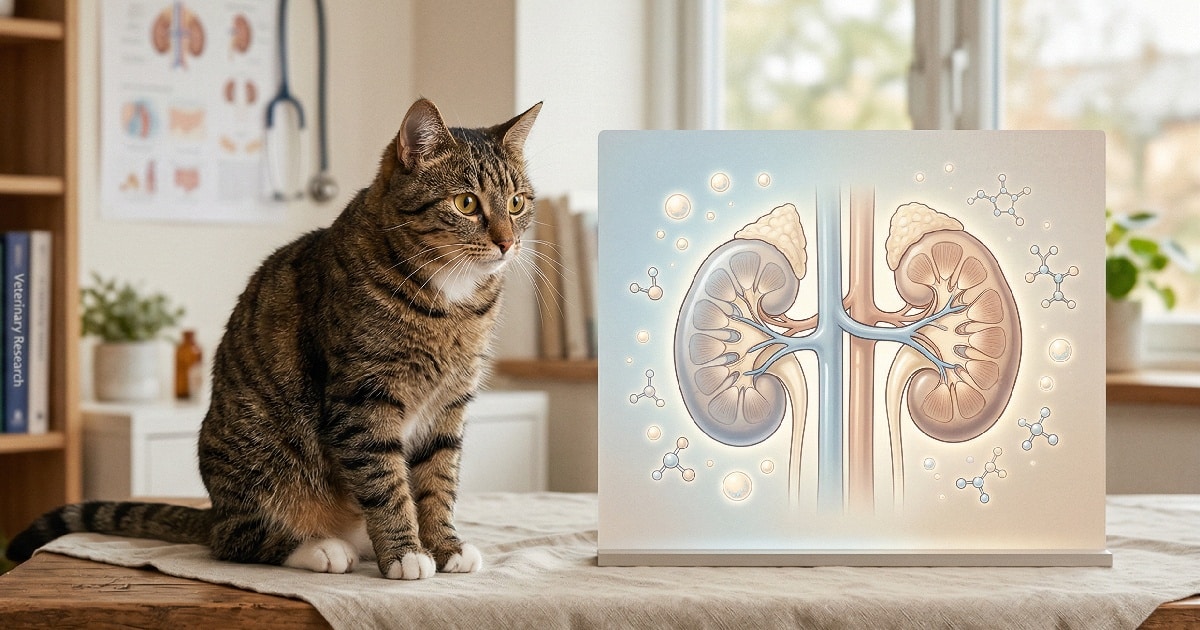
Kidney disease is a diagnosis that many cat parents have come to fear. Chronic kidney disease, also known as CKD, is a very common illness in cats; however, vets have long wondered why cats are so prone to it.
A recent study by the University of Nottingham could give a key piece of information. Researchers found that house cats seem to store unusual types of fat in their kidney cells. These fats aren’t usually found in other mammals, and the researchers think they might be related to the high rate of kidney disease in cats.
The study, published in Frontiers in Veterinary Science, shows how different cat bodies are from those of other mammals.
A Strange Finding in Cat Kidney Cells
To investigate the puzzle, the researchers conducted detailed chemical analyses of kidney tissue samples. They were struck by what they saw. Domestic cats were gathering uncommon kinds of triglycerides – a sort of fat the body normally uses to hold on to energy from food.
In almost all animals, triglycerides have a fairly standard chemical build. But in cats, lots of these fats had strange chemical connections or branch-like forms that scientists don’t often see in other mammals.
Some of the triglycerides also had ether links, special chemical connections that act in a different way from normal fats in food. Because these links act differently inside cells, they could change how fats are processed or stored in kidney tissue.
Dogs and Wild Cats Didn’t Present The Same
One of the most interesting things in the study came when the researchers compared cats to other animals. Dogs showed none of the odd fat buildup that domestic cats had. Even wild cats, which are close relatives, didn’t often show the same pattern.
When the scientists examined samples from Scottish Wildcats, the strange fats were only sometimes present. This difference suggests that something about house cats – or how they work – could make them more likely to gather these lipids.
What’s more, the researchers found signs of these fats in cat kidneys when the cats were young, suggesting the process might start long before kidney disease shows up.
RELATED: Best Urinary and Kidney Supplements for Cats
How These Fats Might Harm Cat Kidney Health
The scientists think this buildup of unusual lipids in kidney cells could be a sign of long-lasting cell stress.
With time, that stress might slowly harm kidney tissue and could possibly contribute to the development of chronic kidney disease.
CKD usually develops slowly. Many cats don’t show many signs at first, and the illness might not be detected until kidney function has already declined. That’s why researchers are especially interested in biological changes that could start years before signs appear. Knowing these early changes could, in the end, help scientists find new ways to protect cat kidney health.
RELATED: From The Vet: 5 Subtle Signs Of Kidney Disease In Cats
What This Study Could Mean for Cats in the Future
Though the study raises many new questions, it also offers possible answers.
Researchers hope that by understanding why these unusual fats accumulate, they may ultimately be able to develop dietary plans to lower the buildup. This could be special foods or additions to help improve fat metabolism in cats. If they are successful, these findings could lead to better ways to stop the illness, earlier tests, and new treatments to keep cats from developing kidney disease.
The findings also strengthen something vets have known for years: cats have a special way of working. As obligate carnivores, their bodies deal with nutrients differently from many other animals, which could change how fats and other things act inside their organs.
For cat parents, the study shows that regular vet visits, early testing, and a healthy diet are important for maintaining long-term kidney health. As scientists continue to study cat biology, findings like this could help open the door to better ways to protect our cats from one of the most common age-related illnesses.
RELATED: Best Urinary and Kidney Support Cat Foods
Study Credit
This article is based on research conducted by scientists at the University of Nottingham.
Study: Brociek, R. A., et al. “Lipid droplets in felid kidneys: prevalence and composition by lipidomics.” Frontiers in Veterinary Science (2026). DOI: 10.3389/fvets.2026.1711591.