
Check out our latest products


![[PETHROOM] Cat Nail Clipper Trimmer for Indoor Cats with Circular Cut Hole (2mm) | Premium Sturdy Stainless Steel Blade Cat Claw | Safe, Easy, Accurate, Quiet & Fast | Avoid Overcutting](https://m.media-amazon.com/images/I/6156hi88deL._AC_SL1298_.jpg)
![[PETHROOM] Professional Eye Comb for Pets | Stainless Steel Tear Stain Remover for Cats & Dogs | Gentle Round-Head Grooming Tool | Compact & Portable for Eye Gunk Removal](https://m.media-amazon.com/images/I/71+W758uwXL._SL1500_.jpg)
You’ve probably Googled “why won’t my dog listen to me” at least once. Maybe more than once, if we’re being honest. And if your dog is on this list, there’s a very good reason it keeps happening.
These 16 least obedient dog breeds aren’t difficult because they’re dumb. Most of them are genuinely brilliant. They’re independent because generations of selective breeding required them to make decisions on their own. Sighthounds chased prey across open terrain without looking back for instructions. Scent hounds followed a trail for miles, completely absorbed in the job. Terriers dove underground after quarry and had to think fast. That kind of self-reliance doesn’t disappear just because you bought a clicker and some training treats.
The good news: every single breed on this list is trainable. They just need consistency, the right motivation, and an owner who understands that stubbornness and stupidity are not the same thing. Not even close.
Training Challenge at a Glance: All 16 Breeds
| Breed | Primary Challenge | Difficulty |
|---|---|---|
| Afghan Hound | Bred to ignore commands and chase | 🔴 Very High |
| Chow Chow | Territorial, cat-like stubbornness | 🔴 Very High |
| Basenji | Independent hunter, short attention span | 🔴 Very High |
| Bulldog | Stubborn, slow to learn | 🟠 High |
| Bloodhound | Nose overrides everything else | 🟠 High |
| Pekingese | Believes YOU are the servant | 🟠 High |
| Dachshund | Stubborn, housebreaking nightmare | 🟠 High |
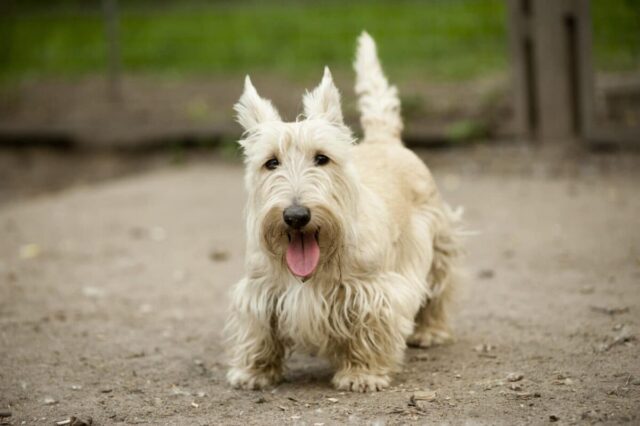
| Welsh Terrier | Independent, barking, digging | 🟠 High |
| Borzoi | Chases everything, ignores recall | 🟠 High |
| Beagle | Nose comes first, always | 🟡 Moderate-High |
| Siberian Husky | Too smart, too opinionated | 🟡 Moderate-High |
| Basset Hound | Slow to respond, nose-focused | 🟡 Moderate |
| Bull Terrier | Tests limits constantly | 🟡 Moderate |
| Old English Sheepdog | Herding instincts override commands | 🟡 Moderate |
| Great Pyrenees | Independent guardian instincts | 🟡 Moderate |
| Chihuahua | Suspicious of everyone, bossy | 🟡 Moderate |
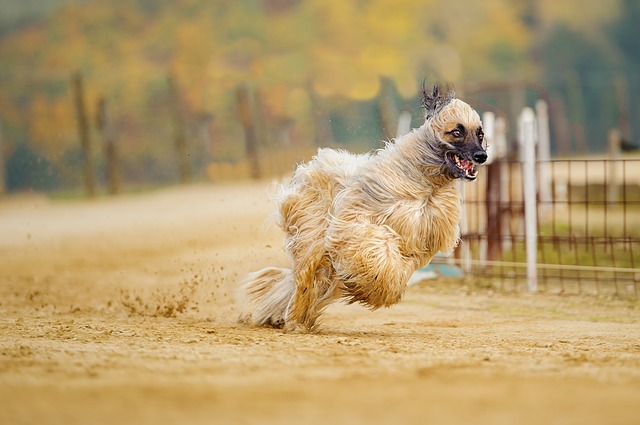
#1 – Afghan Hound
If there’s one breed that defines “least obedient dog breeds,” it’s the Afghan Hound. These dogs were built for one purpose: run at full speed after prey across vast, rugged terrain, making split-second decisions with zero input from a human handler. That’s not a bug. That was the entire job description.
Today, those ancient instincts show up as an almost comical level of aloofness. Your Afghan will look right through you. Owners who love the breed report that no amount of training fully overrides the hunting instinct to chase — the moment something moves, your dog is gone. They need a securely fenced yard and several good runs per week just to meet their physical needs, let alone their mental ones. Training them is absolutely possible, but it requires patience that most people underestimate. They’re deeply loyal and surprisingly affectionate with family once they trust you — they just do things on their own schedule.
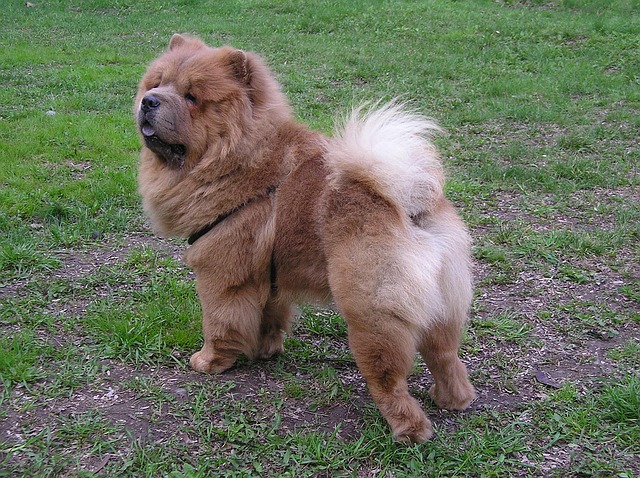
#2 – Chow Chow
Chow Chows have what trainers lovingly call a “cat-like personality” — aloof, reserved, dignified, and genuinely indifferent to whether you approve of their behavior. They’re also highly intelligent, which makes the stubbornness even more pronounced. A Chow knows exactly what you’re asking. They’re just choosing not to do it unless you can convince them it’s their idea.
Without early and thorough socialization, Chow Chows can become territorial and reactive toward strangers and other dogs. That territorial instinct makes them excellent guard dogs on their own turf, but a real liability anywhere else. Positive reinforcement works — eventually — but you need to earn a Chow’s respect before they’ll even consider listening to you. Skip the harsh corrections entirely. This breed shuts down and digs in harder when pushed too far.
#3 – Basenji
The Basenji is like the Chow and the Afghan Hound had a small, energetic child together. Cat-like personality? Check. Independent hunter? Check. Makes a sound that isn’t quite barking — more of a chortle-yodel hybrid that your neighbors will not find endearing? Double check.
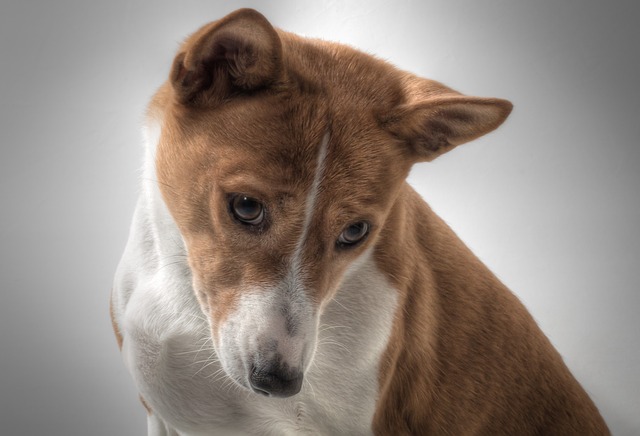
Basenjis were bred in central Africa to hunt independently. That means thinking for themselves is hardwired in. Their attention span during training sessions is genuinely short, and boredom kicks in fast. But here’s the trick: Basenjis have a high play drive. If you turn training into a game — short sessions, high-value rewards, lots of variety — they’ll actually engage. It takes creative consistency, but it works. Start socialization and basic commands as early as you possibly can. Don’t wait on this one.
#4 – Bulldog
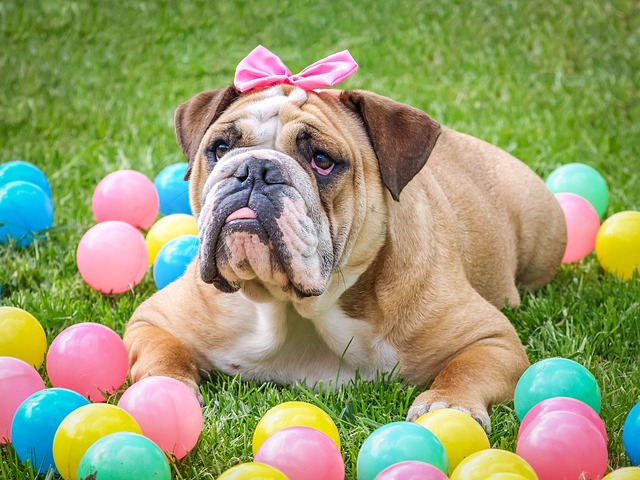
Bulldogs carry a centuries-old reputation for tenacity. They were originally bred to drive cattle and later for bull-baiting — both jobs that required sheer grit and willingness to keep going no matter what. That tenacity is alive and well today, just redirected into everyday life. Getting a Bulldog off the couch? Good luck. Convincing one to do something they’ve decided they don’t want to do? That’s the challenge.
They do things on their own time, at their own pace. They’re also known for being slow learners during formal training, which requires patience and extremely short sessions. One critical thing: Bulldogs are prone to obesity, which makes exercise non-negotiable even when they resist it. Their brachycephalic (flat-faced) structure also limits how hard they can work in hot weather. Train early, keep sessions short and fun, and reward generously.
#5 – Bloodhound
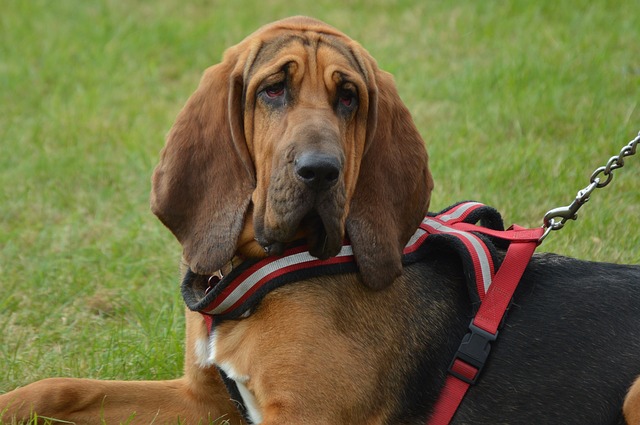
The Bloodhound has a nose so powerful it’s been used as legal evidence in courts. That same nose is also why training one is so incredibly difficult. Once a Bloodhound catches a scent, you essentially stop existing. They’ll follow that trail to the end of the earth, ignoring every command you throw out along the way.
Dogtime has called the Bloodhound “the definition of stubborn,” and that’s pretty accurate. With the right approach — patient leash training, lots of exercise, and consistent boundaries — a Bloodhound can become a wonderfully gentle and tolerant family dog. They’re sensitive souls who respond poorly to harsh corrections. Positive reinforcement and a whole lot of structure are your best bets. And a very secure fence is not optional.
#6 – Pekingese
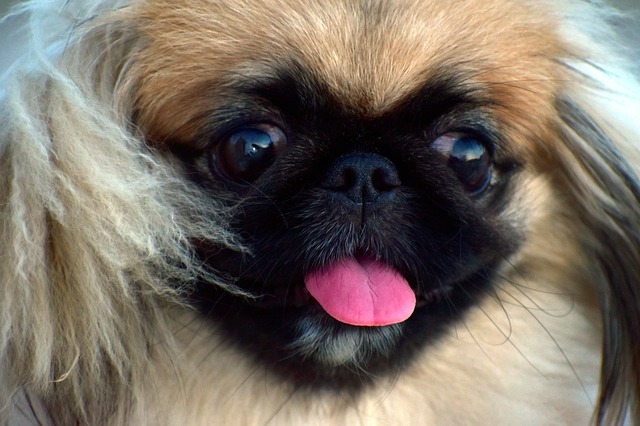
Bred for centuries as a lap dog for Chinese royalty, the Pekingese developed a very specific worldview: you are their loyal subject, not their owner. That regal self-importance makes training them uniquely challenging. They’re intelligent enough to understand commands perfectly. They just don’t see why they should bother complying.
Pekingese can also be territorial with strangers and other pets, which means early socialization is non-negotiable. The key is finding what motivates your individual dog — usually a specific treat or game — and using that consistently. Short, positive sessions that end on a win. They tend to respond to owners who project calm confidence rather than frustration. Getting annoyed at a Pekingese just confirms their suspicion that you’re beneath them.
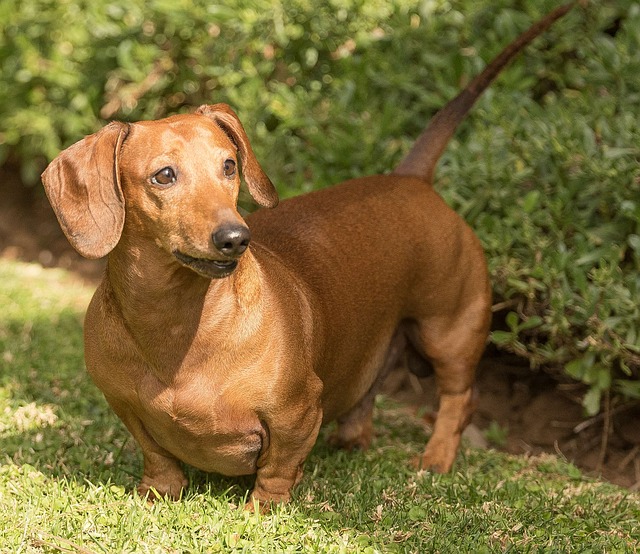
#7 – Dachshund
Don’t let the little legs fool you. Dachshunds were originally bred to hunt badgers, rabbits, foxes, and even boar. They dove headfirst into underground tunnels and dealt with dangerous prey on their own — that’s where the digging instinct comes from, and it’s also why they’re notoriously hard to housebreak. They are brave, independent, and deeply stubborn.
Boredom makes disobedience worse with Dachshunds. A bored Dachshund will tunnel through your backyard, bark at everything that moves, and find creative ways to destroy things. Puzzle toys and mental training games are genuinely helpful here — they need their minds occupied as much as their bodies. Keep sessions very short (5-10 minutes max) and pack them with positive reinforcement. Consistency across every family member matters a lot too.
#8 – Welsh Terrier
Welsh Terriers were bred to hunt independently — mostly foxes, otters, and badgers — which means following someone else’s directions was never part of the job. They’re smart, fast, and incredibly energetic. The problem isn’t that they don’t understand commands. It’s that they’ve decided there are more interesting things to do.
Welsh Terriers love puzzle-solving, and if you don’t channel that mentally, they’ll solve puzzles you’d rather they didn’t (like “how do I get into the trash” or “what’s behind that fence”). They love being up high — on tables, countertops, furniture — and they’ll bark and dig given half a chance. They do best with owners who provide firm, consistent structure wrapped in lots of fun. Think of it less like obedience training and more like keeping a very smart toddler entertained and on task.
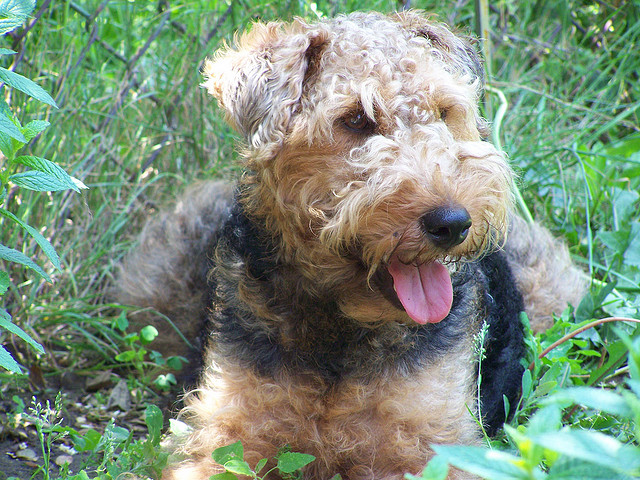 Image source: @somethingferdinand via Flickr
Why Independent Breeds Are So Hard to Train
Most of these breeds were developed to work away from humans, not beside them. Here’s why that matters for training:
- Selective breeding rewarded self-direction. Dogs that waited for commands made terrible hunters. The ones who took initiative survived and reproduced.
- External rewards matter less to them. Retrievers were bred to please their handler. Sighthounds and terriers were bred to please themselves. That changes how much leverage you have with treats and praise.
- They have higher distraction thresholds. A beagle’s nose or a husky’s wanderlust competes directly with your training session. You’re not the most interesting thing in the environment, and you need to work harder to change that.
- Harsh corrections backfire. These breeds tend to shut down, become defensive, or resist harder when training gets confrontational. Positive reinforcement is more than just “nice” — it’s more effective.
- Consistency is everything. All dogs learn through repetition, but independent-minded dogs will exploit any inconsistency. If “sit” sometimes gets a treat and sometimes doesn’t, they’ll just stop bothering.
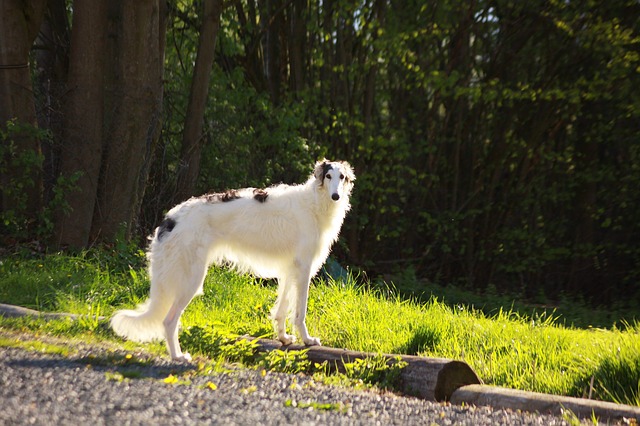
#9 – Borzoi
If you breed a dog to hunt wolves, you probably shouldn’t be surprised that it doesn’t feel a strong need to follow orders. Borzois — once called Russian Wolfhounds — are elegant, fast, and deeply independent. The AKC notes that they can be stubborn in a quiet, catlike way, and that training works best with patience, consistency, and genuine good humor.
Here’s the practical reality: a Borzoi that spots something to chase is not coming back when called. Their prey drive is powerful enough that off-leash time should only happen in well-fenced areas — never on a regular outdoor hike or park visit without a leash. They’re gentle and affectionate with family, but obedience is always going to be a work in progress with this breed. Manage your expectations accordingly and you’ll enjoy them much more.
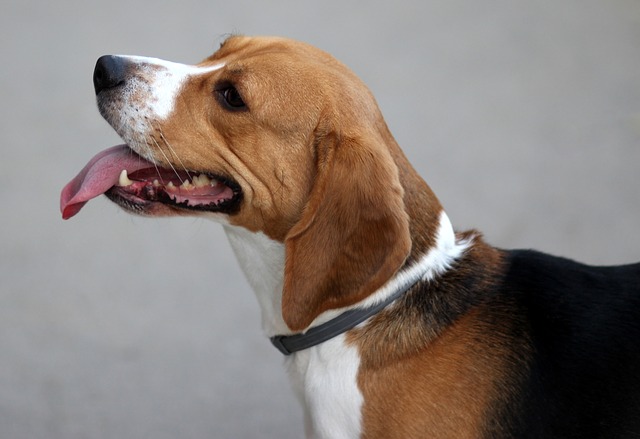
#10 – Beagle
Beagles are wonderful dogs. Friendly, cheerful, great with kids. But training one is a genuine test of character, because their nose controls their entire world. Bred to track small game all day while baying loudly so hunters could follow the pack, Beagles were designed to be completely absorbed in a scent trail and completely indifferent to what you think about it.
That’s exactly what happens at home. Your Beagle smells something interesting outside, and your “sit” command evaporates. They were also built to bay — a deep, carrying sound that neighbors in any neighborhood will notice, at any hour. Beagles need a lot of daily exercise to stay manageable, and more exercise than most people expect for a mid-size dog. They’re also among the most likely breeds to bolt, so a secure fence and a leash are non-negotiable. The creativity required to train a Beagle is real — but so is the reward when it clicks.
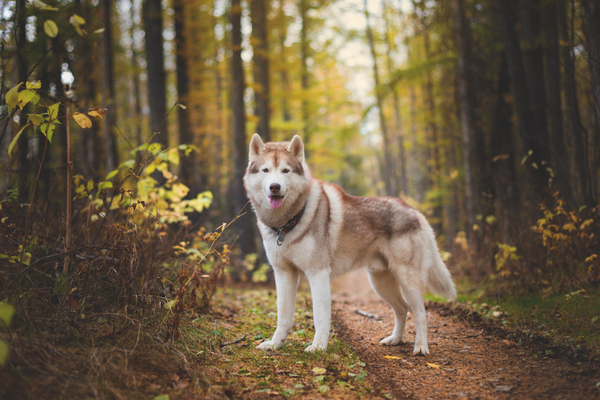
#11 – Siberian Husky
Huskies are one of the most popular breeds in America, and one of the most surrendered — partly because people underestimate exactly what they’re getting into. They’re stunning, energetic, and genuinely intelligent. That intelligence is part of the problem. A Husky that isn’t mentally and physically challenged every single day will find creative outlets for that energy, and you probably won’t like the results.
If your Husky isn’t responding to training, don’t assume they don’t understand what you’re asking. They almost certainly do. They’ve just calculated that compliance isn’t worth their time right now. Huskies are among the most high-energy breeds out there, and tired Huskies are significantly more cooperative Huskies. Build a routine that includes serious daily exercise — we’re talking 2+ hours — and your training sessions will go much better. Skimping on that and expecting obedience is a losing battle.
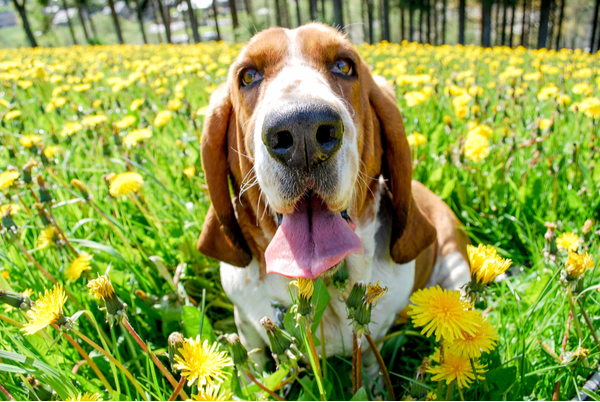
#12 – Basset Hound
Basset Hounds get a bit of an unfair reputation for being dim-witted, but the truth is more nuanced. They’re scent hounds, bred to follow a nose trail with total commitment, which means commands from you rank somewhere below an interesting smell in their priority list. They’re not confused when they ignore you — they’re just very focused on something more important to them.
Basset Hounds are also genuinely slow responders. Ask a Basset to sit and there’s a noticeable delay before anything happens. That’s not defiance, it’s just the way they process. Keep training sessions short and ridiculously consistent, use high-value food rewards (they’re food-motivated, which actually helps), and don’t expect snappy obedience. Patient owners who accept the Basset Hound’s pace tend to end up with wonderfully calm, well-behaved dogs. Rushed owners end up frustrated.
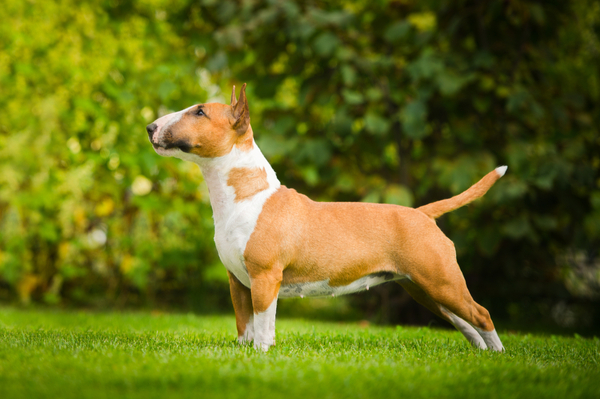
#13 – Bull Terrier
Bull Terriers have one of the most distinctive faces in the dog world — that long egg-shaped head is unmistakable. They’re also one of the most persistent testers of boundaries you’ll ever meet. Bull Terriers will probe every rule you set to see how firm it actually is, and if you give an inch, they remember it forever. They need a firm, consistent approach from day one.
They’re affectionate, funny, and deeply devoted to their families. But that adorable face can make it awfully tempting to let things slide, which is exactly when the stubbornness gets out of hand. Bull Terriers respond well to confident, upbeat training — lots of positive reinforcement, clear rules that never waver, and owners who find the whole thing entertaining rather than exhausting. If you can match their energy and sense of humor, you’ll have a wonderfully loyal companion.
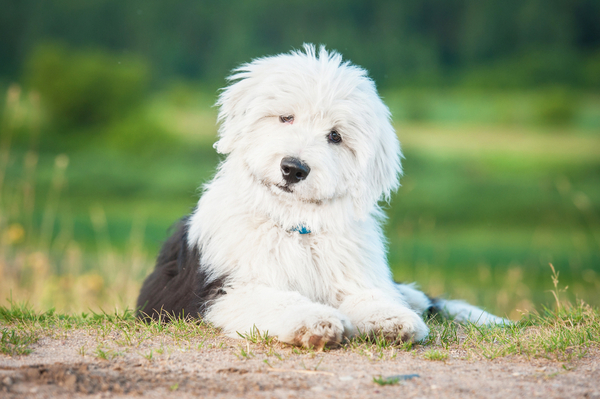
#14 – Old English Sheepdog
Old English Sheepdogs look like fluffy, loveable animated bears, and they’re every bit as charming as they appear. They’re also herding dogs with a strong independent streak. Herding breeds need to make their own decisions when moving livestock, which means they’re not wired to simply defer to you on every call.
The good news is that Old English Sheepdogs are quite intelligent and respond well to training once you’ve established yourself as a confident leader. Assertiveness matters here — if your OES senses uncertainty, they’ll happily step into the decision-making role themselves. Once trained, they make genuinely wonderful family dogs that are great with children. The challenge is the “once trained” part, which requires consistent work, especially during the first year. That coat also requires a significant grooming commitment, which is worth knowing going in.
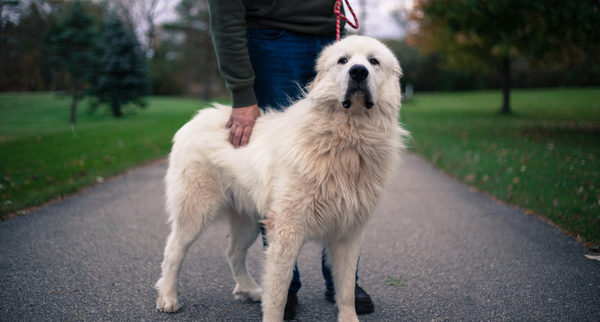
#15 – Great Pyrenees
Great Pyrenees were bred to guard livestock on mountain terrain, largely without human supervision. They’d patrol alone through the night, making independent calls about threats. That kind of job creates a dog with tremendous confidence in their own judgment — and a degree of skepticism toward yours. They’re not aggressive or hostile. They’re just very sure they know best.
If they sense any weakness or inconsistency in an owner, they’ll take over. That’s not stubbornness as much as it’s just doing their job as they understand it. Early training and clear structure matter a lot with this breed. They also tend to be vocal at night (alert barking is part of the guardian role) and love to roam, so a tall, secure fence is essential. For families who put in the early work, the payoff is a loyal, calm, and deeply affectionate companion. They’re worth it — you just have to earn their respect first.
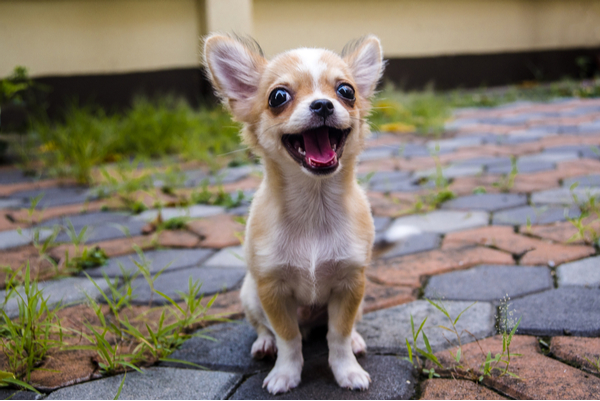
#16 – Chihuahua
Chihuahuas are tiny dogs with enormous personalities — and an enormous opinion of their own importance. They’re suspicious of strangers by default, which makes them surprisingly effective alert dogs. But that suspicion also creates training challenges, because convincing a Chihuahua to accept people or situations they’ve decided they don’t like takes real, sustained effort.
Small dog syndrome is real, and it usually happens because owners don’t apply the same training standards to little dogs that they would to large breeds. A 6-pound Chihuahua jumping on guests or growling at strangers seems less urgent than a 90-pound German Shepherd doing the same thing, so it often gets ignored. Don’t do that. Chihuahuas are sharp enough to pick up commands quickly — they just need an owner willing to be consistent about boundaries, even when it’s easier to just let the tiny dog win. Start early, socialize extensively, and you’ll have a confident, well-adjusted little dog.
Frequently Asked Questions About the Least Obedient Dog Breeds
What makes a dog breed disobedient?
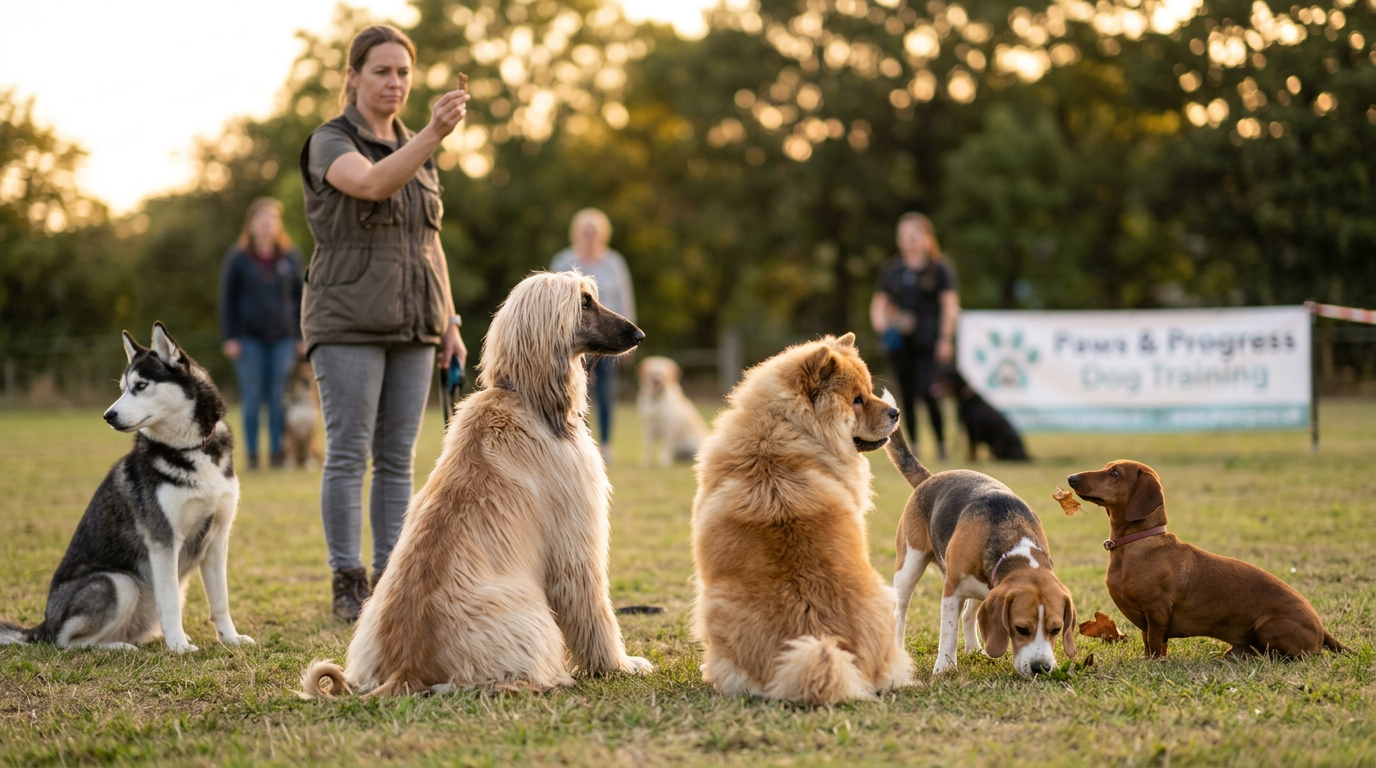
Most “disobedient” dogs were selectively bred for jobs that required independent decision-making. Sighthounds chased prey without waiting for commands. Scent hounds followed trails for miles on their own. Terriers made split-second decisions underground. That independence is a feature of the breed, not a flaw. These dogs aren’t refusing to obey because they’re dumb — most are genuinely intelligent. They just weren’t bred to prioritize human commands the way retrievers or shepherds were.
Can you train a dog that’s on this list?
Yes, absolutely. Every breed on this list is trainable. The key is understanding what motivates your specific dog (high-value treats, play, praise), keeping sessions short and positive, starting early, and being relentlessly consistent. Harsh corrections tend to backfire with independent breeds — they either shut down or dig in harder. Positive reinforcement combined with clear, consistent rules is the most effective approach for all 16 of these breeds.
Which breed on this list is the hardest to train?
The Afghan Hound consistently ranks among the most challenging, because their prey drive is so powerful that it essentially overrides everything else the moment they spot something moving. Chow Chows and Basenjis are close runners-up due to their deeply ingrained independent streaks. That said, difficulty varies a lot by individual dog, your training approach, and how early you start.
Are independent dog breeds good for first-time owners?
Most trainers recommend against pairing a first-time owner with breeds like the Afghan Hound, Chow Chow, or Siberian Husky. These dogs need someone who understands dog behavior, can project calm confidence, and won’t give up when things get frustrating. That’s not impossible for a motivated first-timer, but it’s a steeper learning curve. Breeds like the Basset Hound or Old English Sheepdog are somewhat more forgiving for newer owners while still presenting real training challenges.
Do these dogs end up in shelters more often?
Unfortunately, yes. Several breeds on this list — including Siberian Huskies and Chow Chows — appear regularly on lists of the most abandoned dog breeds. Owners often adopt them based on appearance or popularity without fully researching the training demands, then surrender them when the reality sets in. Do your research before you commit to any breed on this list.
Does the title “least obedient” mean these dogs are bad pets?
Not at all. Many people prefer independent-minded dogs precisely because of their personalities. Afghan Hound owners wouldn’t trade that dignified aloofness for anything. Basset Hound families love their slow, laid-back companions. Siberian Husky owners accept the chaos in exchange for the loyalty and energy. “Least obedient” just means they need more patience, more consistency, and owners who’ve gone in with realistic expectations. With the right person, every breed on this list makes a wonderful companion.
Bottom Line
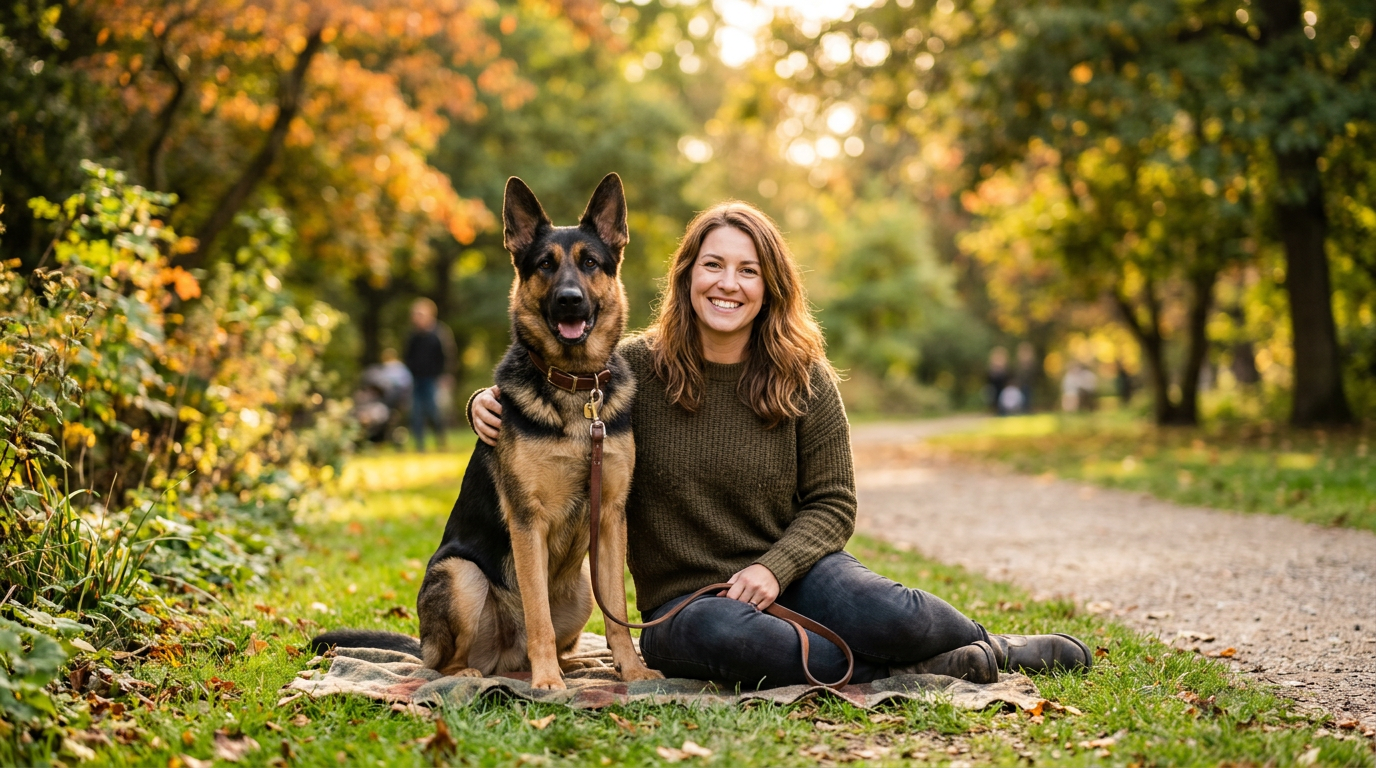
Every dog on this list of least obedient dog breeds comes with a real training challenge. But “challenging” doesn’t mean “not worth it.” It means going in with your eyes open, a solid training plan, and the patience to stick with it even when your Dachshund ignores you for the 47th time in a row.
The breeds that require the most work from you also tend to give back the most in personality, loyalty, and sheer entertainment value. Afghan Hounds are breathtaking. Siberian Huskies are hilarious. Beagles are relentlessly happy. Chow Chows are loyal to the core once you’ve earned their trust. None of that is diminished by the fact that training them takes more effort than training a Golden Retriever.
Start early, stay consistent, make it positive, and manage your expectations. You can absolutely build a wonderful life with any of these breeds. You just have to meet them where they are. If you’re considering adopting one of these independent spirits, check out what’s available at your local shelter first — some of the best dogs out there are waiting for exactly the right patient owner.